

Few nighttime problems are as disruptive as loud, persistent snoring. What starts as an occasional annoyance can eventually affect an entire household, interrupt sleep, and leave both the snorer and their partner feeling exhausted the next morning.
For some people, snoring is simply an irritating sleep habit. For others, it may be associated with nasal congestion, sleeping position, alcohol consumption, excess weight, or anatomical factors that restrict airflow while sleeping. Persistent or particularly loud snoring can also sometimes be associated with obstructive sleep apnea, making it important not to dismiss severe symptoms.
As a result, people searching for a Loud Snoring Solution often look for approaches that can improve nighttime breathing without immediately turning to complicated equipment or invasive procedures.
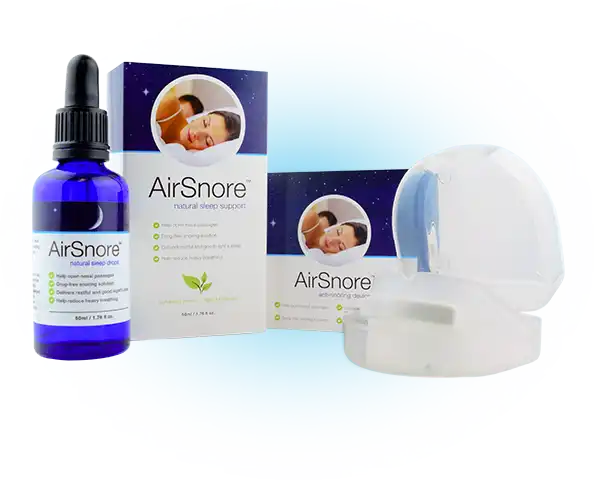
AirSnore is a natural sleep-support product marketed to help address snoring by supporting clearer airways and more comfortable breathing during sleep. The system has traditionally been associated with both a herbal oral supplement and an anti-snoring mouthpiece designed to help maintain an open airway.
But can AirSnore really help with loud snoring?
This guide explores how AirSnore works, its potential benefits, the role of its ingredients and mouthpiece, lifestyle strategies that may reduce snoring, and when persistent snoring should be evaluated by a healthcare professional.
Table of Contents
What Causes Loud Snoring?
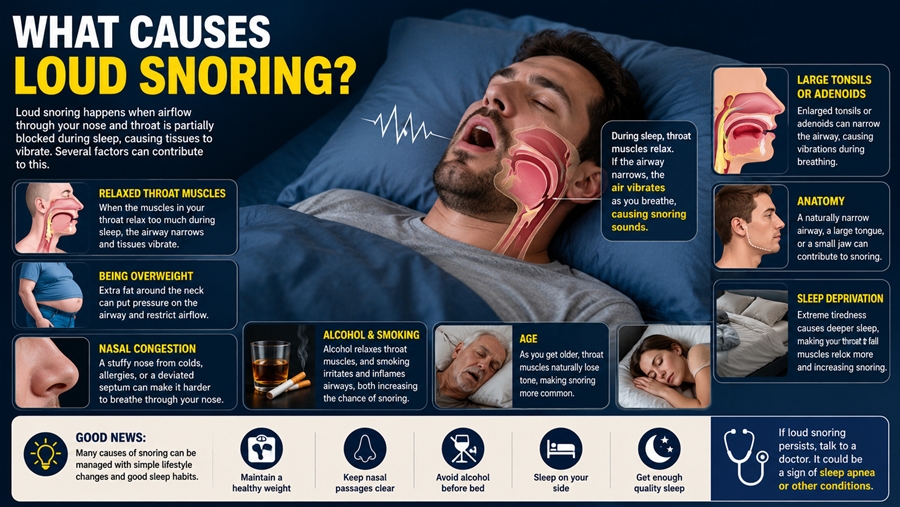
Snoring happens when airflow through the nose and throat becomes partially restricted during sleep.
As air moves through narrowed tissues, surrounding structures can vibrate, creating the familiar snoring sound.
Several factors can contribute to this restriction.
Relaxed Throat Muscles
During sleep, the muscles in the throat naturally relax.
For some people, this causes the airway to become narrower, increasing the likelihood of vibration and snoring.
Nasal Congestion
Blocked nasal passages can make breathing more difficult.
Common causes include:
- Allergies
- Colds
- Sinus congestion
- Dry air
- Nasal inflammation
When nasal breathing becomes difficult, some people begin breathing through their mouth, potentially increasing snoring.
Sleeping Position
Snoring can become worse when sleeping on your back.
In this position, the tongue and soft tissues may move toward the back of the throat, narrowing the airway.
Alcohol Before Bed
Alcohol can further relax muscles in the upper airway and may make snoring more pronounced.
Reducing alcohol intake, particularly close to bedtime, may help some people.
Excess Body Weight
Additional tissue around the neck can contribute to airway narrowing.
For people who are overweight, gradual weight reduction may sometimes improve snoring.
Why Finding a Loud Snoring Solution Matters
Snoring doesn’t only affect the person making the noise.
It can also disturb:
- Partners
- Family members
- Roommates
Persistent snoring may contribute to:
- Interrupted sleep
- Daytime tiredness
- Morning headaches
- Poor concentration
- Irritability
- Relationship difficulties
The impact can become especially significant when snoring happens every night.
What Is AirSnore?

AirSnore is a natural anti-snoring product designed to support nighttime breathing.
The AirSnore system has been marketed around two complementary approaches:
- A herbal supplement intended to support respiratory and nighttime wellness.
- An anti-snoring mouthpiece designed to help maintain a more favorable airway position during sleep.
This combination makes AirSnore different from products that focus exclusively on supplements or exclusively on mechanical airway positioning.
How AirSnore May Work
Supporting Clearer Nasal Breathing
The herbal component of AirSnore is intended to support normal respiratory function and clearer breathing.
For people whose snoring is aggravated by nasal congestion or restricted nasal airflow, improving nasal breathing may potentially reduce nighttime breathing difficulties.
Supporting Airway Position
The AirSnore mouthpiece is designed to help position the lower jaw in a way that can help maintain space in the upper airway.
This approach is similar in principle to mandibular advancement devices, which are used to help reduce snoring in some people.
By changing jaw position, an oral appliance may help reduce the tendency of soft tissues to obstruct airflow.
Potential AirSnore Benefits
1. May Help Reduce Snoring
The primary reason people consider AirSnore is its potential to reduce nighttime snoring.
By addressing factors related to airway positioning and breathing, the system may help decrease the vibration responsible for snoring in some users.
2. Supports More Comfortable Breathing
A clearer airway can make nighttime breathing feel more comfortable.
AirSnore is intended to support normal airflow while sleeping rather than simply masking the sound of snoring.
3. May Improve Sleep Quality
Loud snoring can cause repeated disturbances throughout the night.
Reducing snoring may help create a quieter sleep environment for both the user and their partner.
However, reducing snoring does not necessarily mean that an underlying sleep disorder has been treated.
4. Can Benefit Sleep Partners
One overlooked benefit of addressing snoring is the effect on the person sleeping next to you.
A quieter nighttime environment may help partners:
- Fall asleep more easily
- Stay asleep longer
- Experience fewer nighttime disturbances
5. Non-Invasive Approach
An anti-snoring mouthpiece provides a non-surgical approach to managing snoring.
For people who prefer to avoid invasive procedures, an oral appliance may be an appealing option.
AirSnore Ingredients

The exact formulation should always be checked against the current product packaging because supplement ingredients and amounts can change.
Historically, the AirSnore herbal formula has included ingredients selected for respiratory and nighttime support.
These may include botanical ingredients such as:
- Eucalyptus
- Peppermint
- Sage
- Lemon balm
- Hops
- Passionflower
- Chamomile
Each ingredient has a different traditional role.
Eucalyptus
Eucalyptus has traditionally been used to support respiratory comfort.
Its aromatic compounds are commonly associated with:
- Clearer-feeling breathing
- Respiratory comfort
- Nasal freshness
Peppermint
Peppermint contains menthol, which produces a cooling sensation and is frequently used in products designed to support comfortable breathing.
Sage
Sage has a long history of traditional herbal use.
It is commonly included in wellness formulas because of its antioxidant and botanical properties.
Lemon Balm
Lemon balm is traditionally used for relaxation and nighttime wellness.
Because relaxation is an important part of a healthy bedtime routine, it may complement a broader sleep-support formula.
Hops
Hops are traditionally associated with relaxation and sleep support.
They are frequently used in herbal nighttime formulas.
Passionflower
Passionflower is another botanical commonly used in relaxation-oriented supplements.
It may help support a calmer bedtime environment.
Chamomile
Chamomile is widely recognized as a traditional bedtime herb.
It is commonly used to promote relaxation and support a calming nighttime routine.
The AirSnore Mouthpiece
The mouthpiece is one of the most important parts of the AirSnore approach.
Unlike a supplement, which works through nutritional or botanical ingredients, an oral appliance works mechanically.
The mouthpiece is designed to help position the lower jaw forward while sleeping.
This can potentially:
- Increase space in the upper airway
- Reduce airway narrowing
- Reduce soft-tissue vibration
- Improve nighttime airflow
This type of approach is particularly relevant because snoring is fundamentally related to airflow and tissue vibration.
AirSnore vs Traditional Snoring Remedies
There are many approaches people use to address snoring.
| Approach | Main Purpose | Non-Invasive |
|---|---|---|
| AirSnore | Airway positioning + herbal support | Yes |
| Nasal strips | Support nasal airflow | Yes |
| Nasal sprays | Address nasal congestion | Usually |
| Side sleeping | Reduce airway collapse associated with back sleeping | Yes |
| Weight management | Reduce contributing physical factors | Yes |
| CPAP | Treat obstructive sleep apnea | Yes, but medical equipment |
| Oral appliances | Reposition jaw to improve airway space | Yes |
Different approaches work for different causes of snoring.
How to Use AirSnore as Part of a Snoring-Reduction Routine
Using an anti-snoring product is only one part of the solution.
Several lifestyle changes may also help.
Sleep on Your Side
If you typically snore while sleeping on your back, try sleeping on your side.
A body pillow or positional aid may make side sleeping easier.
Maintain a Healthy Weight
If excess weight contributes to airway narrowing, gradual weight loss may help reduce snoring.
Even moderate changes can sometimes improve nighttime breathing.
Avoid Alcohol Before Bed
Alcohol can relax the muscles around the upper airway.
Avoiding alcohol close to bedtime may help reduce snoring in some people.
Keep Your Bedroom Air Comfortable
Dry air may irritate the nasal passages.
Maintaining comfortable humidity can help some people breathe more comfortably.
Treat Nasal Congestion
If allergies or congestion are contributing to snoring, addressing the underlying nasal problem may improve airflow.
Maintain a Consistent Sleep Schedule
Irregular sleep schedules can interfere with sleep quality.
Try to:
- Go to bed at a consistent time
- Wake up at a consistent time
- Create a relaxing bedtime routine
Is AirSnore a Solution for Everyone?
No.
Snoring has many possible causes, and an anti-snoring supplement or mouthpiece cannot address every underlying problem.
AirSnore may be more appropriate for people whose snoring is related to factors such as:
- Mild airway narrowing
- Sleeping position
- Mouth breathing
- Relaxed throat tissues
However, people with symptoms suggesting obstructive sleep apnea should seek professional evaluation rather than relying solely on an over-the-counter product.
Snoring vs Sleep Apnea
This distinction is extremely important.
Ordinary snoring is generally caused by vibration of tissues as air passes through a partially narrowed airway.
Obstructive sleep apnea involves repeated episodes where the upper airway becomes significantly blocked during sleep.
Possible warning signs include:
- Very loud chronic snoring
- Gasping or choking during sleep
- Witnessed pauses in breathing
- Excessive daytime sleepiness
- Morning headaches
- Difficulty concentrating
- Waking with a dry mouth
If these symptoms occur, speak with a qualified healthcare professional.
An anti-snoring product should not be used as a substitute for diagnosis or treatment of suspected sleep apnea.
AirSnore™ Real User Feedback
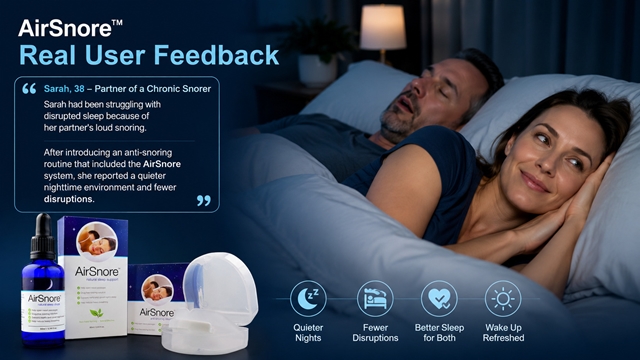
Sarah, 38 – Partner of a Chronic Snorer
Sarah had been struggling with disrupted sleep because of her partner’s loud snoring.
After introducing an anti-snoring routine that included the AirSnore system, she reported a quieter nighttime environment and fewer disruptions.
Michael, 44 – Frequent Snorer
Michael noticed that his snoring was particularly bad when sleeping on his back.
He combined side sleeping with the AirSnore mouthpiece and reported that his nighttime breathing seemed more comfortable.
David, 51 – Occasional Loud Snorer
David experienced increased snoring when congested or after late nights.
He focused on improving his sleep routine and used AirSnore as part of his broader approach to nighttime breathing.
Individual experiences vary, and testimonials should not be interpreted as guarantees of results.
Who May Consider AirSnore™?
AirSnore may appeal to adults who:
- Regularly snore
- Want a non-invasive approach
- Prefer an oral appliance
- Experience occasional nasal congestion
- Want to improve the nighttime environment for themselves and their partner
However, persistent or severe snoring should be evaluated if it is accompanied by symptoms of sleep apnea.
Safety and Important Considerations
Before using an oral anti-snoring appliance, consider whether you have:
- Significant dental problems
- Jaw pain
- Temporomandibular joint problems
- Loose teeth
- Dentures
- Other oral health concerns
A healthcare professional or qualified dental professional can help determine whether an oral appliance is appropriate.
Also remember that herbal ingredients can interact with medications or cause reactions in sensitive individuals.
Always follow the current product instructions and ingredient label.
FAQs – AirSnore™ Loud Snoring Solution
What is the best Loud Snoring Solution?
There isn’t one solution that works for everyone because snoring can have different causes. Lifestyle changes, nasal treatments, oral appliances, and medical evaluation may all be appropriate depending on the individual.
Can AirSnore stop loud snoring?
AirSnore is designed to help reduce snoring by supporting airway positioning and nighttime breathing, but results vary from person to person.
How does the AirSnore mouthpiece work?
The mouthpiece is designed to position the lower jaw forward, which may help create more space in the upper airway and reduce tissue vibration.
Is AirSnore a natural Loud Snoring Solution?
AirSnore has been marketed as a natural approach because its system combines an oral appliance with a herbal supplement component.
Can AirSnore improve sleep quality?
Reducing snoring may contribute to a quieter sleeping environment, but AirSnore should not be considered a treatment for diagnosed sleep disorders.
Can sleeping on my side reduce snoring?
Yes. Side sleeping can help some people because lying on the back may encourage the tongue and soft tissues to move toward the airway.
Does alcohol make snoring worse?
It can. Alcohol relaxes the muscles around the upper airway and may increase snoring.
Can losing weight reduce snoring?
For people whose snoring is associated with excess body weight, gradual weight loss may reduce airway narrowing and improve symptoms.
Is loud snoring always harmless?
No. Persistent loud snoring can sometimes be associated with obstructive sleep apnea, especially when accompanied by gasping, choking, breathing pauses, or excessive daytime sleepiness.
Can an anti-snoring mouthpiece treat sleep apnea?
Some professionally fitted oral appliances are used to manage certain cases of obstructive sleep apnea. However, an over-the-counter anti-snoring product should not automatically be considered a treatment for sleep apnea.
How quickly can an anti-snoring device work?
A mechanical mouthpiece may affect airway positioning immediately when worn, but the overall experience and effectiveness vary between individuals.
Should I see a doctor about loud snoring?
Yes, particularly if your snoring is persistent, very loud, or accompanied by breathing pauses, gasping, choking, excessive daytime sleepiness, or morning headaches.
Final Verdict
Finding an effective Loud Snoring Solution often requires understanding what’s causing the problem in the first place. Sleeping position, nasal congestion, alcohol, body weight, and airway anatomy can all contribute to nighttime snoring.
AirSnore takes a two-part approach, combining an oral mouthpiece designed to support airway positioning with a herbal formula intended to promote comfortable nighttime breathing. For some adults, this may provide a convenient, non-invasive option for managing ordinary snoring.
However, no over-the-counter solution should be considered a universal cure. If loud snoring occurs alongside gasping, choking, breathing pauses, or significant daytime sleepiness, professional evaluation is much more important than simply trying another anti-snoring product.
Final Thought
Snoring may seem like a minor nighttime annoyance, but when it becomes loud and persistent, it can affect everyone in the bedroom. Creating a consistent sleep routine, sleeping on your side, managing congestion, limiting alcohol before bed, and maintaining a healthy weight can all contribute to better nighttime breathing.
For adults looking for an additional Loud Snoring Solution, AirSnore may be worth considering as part of a broader approach—particularly for those interested in a non-invasive oral appliance and herbal support. The key is to address the underlying cause rather than simply trying to silence the sound.

Zahra Thunzira is a Jakarta-based nutritionist and gym instructor. She’s also an adventure travel, fitness, and health writer for several blogs and websites. She earned her Master degree in Public Health from University of Indonesia.
