
Waking up with a dry mouth, noticing loud snoring, or being told that you sleep with your mouth open can be more than an embarrassing nighttime habit. Mouth breathing while sleeping is relatively common and can occur when the nasal passages become difficult to breathe through or when the upper airway becomes partially restricted during sleep.
For some people, occasional mouth breathing may simply be associated with a blocked nose or temporary congestion. For others, it can become a recurring nighttime pattern accompanied by loud snoring, dry mouth, restless sleep, and morning fatigue.
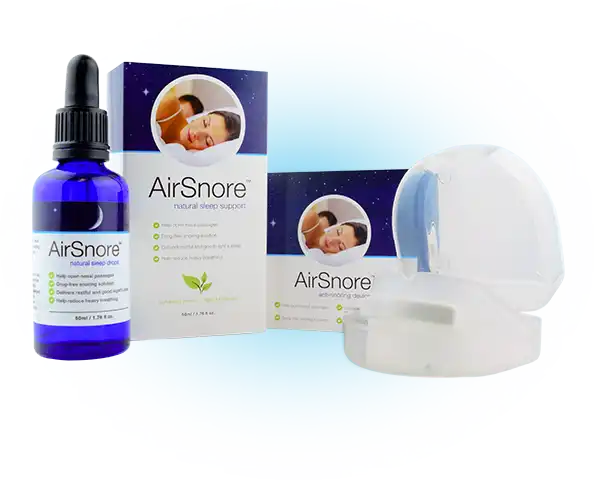
If you’re searching for ways to breathe more comfortably at night, you may have come across AirSnore. The product is marketed as an anti-snoring solution that combines a mouthpiece with a herbal supplement designed to support nighttime breathing.
But can AirSnore help if you regularly breathe through your mouth while sleeping?
The answer depends largely on why you’re mouth breathing in the first place. An anti-snoring mouthpiece may help some people by supporting a more favorable jaw and airway position, while lifestyle changes and treatment of nasal congestion may be more appropriate for others.
This guide explains the relationship between mouth breathing and snoring, why it happens, how AirSnore is designed to work, and what you can do to encourage more comfortable nasal breathing at night.
Table of Contents
What Is Mouth Breathing While Sleeping?
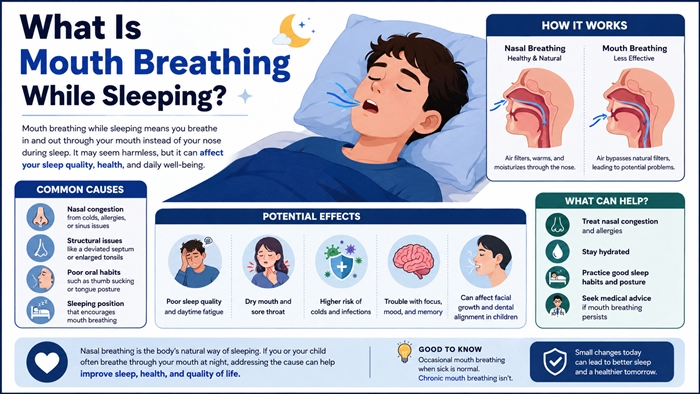
Mouth breathing while sleeping occurs when a person primarily inhales and exhales through the mouth rather than the nose during sleep.
Ideally, the nose filters, warms, and humidifies incoming air. However, several factors can make nasal breathing difficult.
These may include:
- Nasal congestion
- Allergies
- Deviated nasal septum
- Enlarged nasal tissues
- Respiratory infections
- Dry air
- Certain sleeping positions
- Airway narrowing
When nasal breathing becomes restricted, the body may naturally switch to mouth breathing to maintain airflow.
For some people, this happens occasionally. For others, it may occur almost every night.
Why Do People Sleep With Their Mouth Open?
Understanding the cause is important because mouth breathing isn’t necessarily caused by one single problem.
Nasal Congestion
One of the most common reasons people breathe through their mouths at night is difficulty breathing through the nose.
Congestion can result from:
- Seasonal allergies
- Colds
- Sinus irritation
- Dust
- Environmental allergens
When the nose is blocked, breathing through the mouth becomes easier.
Deviated Nasal Septum
A deviated septum occurs when the wall separating the nasal passages is displaced.
Depending on the severity, it may make breathing through one or both nostrils more difficult, particularly when lying down.
Enlarged Nasal or Throat Tissues
Anatomical differences can affect how easily air moves through the upper airway.
Some people naturally have narrower nasal passages or throat structures that make nighttime breathing more challenging.
Sleeping Position
Sleeping on your back may encourage the tongue and soft tissues to move backward.
This can contribute to airway narrowing and may increase the likelihood of snoring and mouth breathing.
Alcohol Before Bed
Alcohol can relax the muscles around the upper airway.
For some people, drinking alcohol before bedtime can therefore make snoring and nighttime mouth breathing more noticeable.
Why Mouth Breathing While Sleeping Can Cause Snoring
Mouth breathing and snoring frequently occur together.
When you breathe through your mouth during sleep, air passes directly through the oral cavity and throat. If the airway is partially narrowed, the surrounding soft tissues can vibrate as air moves through them.
That vibration produces the sound we recognize as snoring.
This creates a potential cycle:
Nasal restriction → mouth breathing → altered airflow → tissue vibration → snoring
However, mouth breathing isn’t the only cause of snoring, and not everyone who breathes through their mouth will snore.
Signs You May Be Mouth Breathing at Night
You may not realize that you sleep with your mouth open.
Possible clues include:
- Waking with a dry mouth
- Dry or irritated throat
- Morning bad breath
- Drooling on your pillow
- Frequent snoring
- Nasal congestion
- Waking feeling thirsty
- Your partner noticing your mouth is open
- Feeling that you breathe better through your mouth than your nose
If these symptoms occur regularly, identifying the underlying cause may help determine the most appropriate solution.
What Is AirSnore?

AirSnore is an anti-snoring system designed to support nighttime breathing.
The system has traditionally combined:
- An oral mouthpiece designed to support airway positioning.
- A herbal supplement intended to support respiratory and nighttime wellness.
The mouthpiece is particularly relevant to people experiencing snoring associated with airway positioning.
Instead of simply attempting to mask the sound of snoring, an oral appliance aims to influence the physical conditions that contribute to airway narrowing.
How AirSnore May Help With Mouth Breathing While Sleeping
Supports a More Favorable Jaw Position
The AirSnore mouthpiece is designed to position the lower jaw forward while sleeping.
This may help create additional space in the upper airway.
For some people, improving airway positioning may reduce the tendency of soft tissues to vibrate.
May Reduce Snoring
If mouth breathing and snoring are partly related to airway narrowing, improving airway positioning may help reduce the vibration responsible for snoring.
However, results vary depending on the individual’s anatomy and the underlying cause.
Supports Nighttime Airflow
The goal of the mouthpiece isn’t simply to keep the mouth closed.
Instead, it is designed to help maintain a more favorable airway position while sleeping.
This distinction is important because forcing the mouth closed when someone cannot breathe comfortably through their nose may not address the underlying problem.
May Improve the Sleeping Environment
If AirSnore reduces snoring for a particular user, the resulting quieter environment may benefit both the person using it and their sleeping partner.
AirSnore Drop Ingredients and Respiratory Support

The herbal component of AirSnore has historically included botanical ingredients intended to support respiratory comfort and nighttime relaxation.
The exact formula should always be checked against the current product label because formulations can change.
Commonly associated ingredients have included:
- Eucalyptus
- Peppermint
- Sage
- Lemon balm
- Hops
- Passionflower
- Chamomile
Eucalyptus
Eucalyptus is traditionally associated with respiratory comfort and a clearer-feeling breathing experience.
Its aromatic compounds are commonly used in products intended to support comfortable nasal breathing.
Peppermint
Peppermint contains menthol, which produces a cooling sensation.
It is frequently used in respiratory and wellness products to promote a feeling of freshness and comfortable breathing.
Sage
Sage has a long history of traditional herbal use and is commonly included in botanical wellness formulas.
Lemon Balm
Lemon balm is traditionally used for relaxation and nighttime wellness.
A calming bedtime routine can be helpful for people trying to improve overall sleep quality.
Hops
Hops are traditionally associated with relaxation and nighttime support.
Passionflower
Passionflower is commonly used in herbal formulas designed to promote calmness and relaxation.
Chamomile
Chamomile is one of the most familiar traditional bedtime herbs and is often used as part of nighttime wellness routines.
Key AirSnore Benefits for Mouth Breathers
1. Supports More Comfortable Nighttime Breathing
One of the primary reasons someone may consider AirSnore is the desire for more comfortable breathing during sleep.
The mouthpiece is designed to support airway positioning, while the herbal component is intended to complement nighttime respiratory wellness.
2. May Help Reduce Snoring
For people whose snoring is related to airway narrowing, an oral appliance may help reduce the vibration of soft tissues.
3. May Help Create a Quieter Bedroom
Reducing loud snoring can benefit partners and other people sharing the sleeping environment.
4. Non-Invasive Approach
AirSnore offers an alternative to surgical approaches for ordinary snoring.
The mouthpiece is removable and does not require a medical procedure.
5. Supports a Broader Sleep Routine
AirSnore can be combined with other healthy habits, including improved sleep positioning, nasal hygiene, and consistent sleep schedules.
How to Reduce Mouth Breathing While Sleeping Naturally
AirSnore is only one potential component of a nighttime breathing strategy.
Several lifestyle measures may also help.
Keep Your Nasal Passages Clear
If congestion is causing mouth breathing while sleeping, addressing nasal obstruction may be one of the most important steps.
Depending on the cause, this might involve:
- Managing allergies
- Using saline nasal rinses
- Avoiding known irritants
- Treating respiratory infections appropriately
- Discussing persistent congestion with a healthcare professional
Try Side Sleeping
Sleeping on your side may help keep the upper airway more open than sleeping flat on your back.
A body pillow can help make side sleeping more comfortable.
Maintain Appropriate Bedroom Humidity
Very dry air can make the nose and throat feel irritated.
Maintaining comfortable humidity may help support more comfortable nighttime breathing.
Avoid Alcohol Before Bed
Alcohol can increase relaxation of upper-airway muscles and may make snoring worse.
Reducing alcohol intake close to bedtime may help some people.
Maintain a Healthy Weight
Excess tissue around the neck can contribute to airway narrowing.
For people who are overweight, gradual weight reduction may improve snoring and nighttime breathing.
Can AirSnore Stop Mouth Breathing?
This is an important distinction.
AirSnore is primarily designed as an anti-snoring product. Its mouthpiece may support airway positioning, but it should not be considered a guaranteed way to eliminate mouth breathing.
If the underlying problem is severe nasal obstruction, allergies, a deviated septum, or another medical condition, addressing that cause may be more important.
The goal should be to understand why you’re breathing through your mouth rather than simply trying to force the mouth closed.
Mouth Breathing vs Nasal Breathing
| Feature | Nasal Breathing | Mouth Breathing |
|---|---|---|
| Air pathway | Nose | Mouth |
| Filters incoming air | Yes | Limited |
| Humidifies air | Yes | Less effectively |
| Common during healthy sleep | Yes | Can occur when nasal breathing is difficult |
| May be associated with snoring | Sometimes | Frequently |
| Dry mouth | Less common | More common |
Nasal breathing is generally preferred when the nasal passages are functioning normally.
When Mouth Breathing May Require Medical Attention
Occasional mouth breathing isn’t necessarily a cause for concern.
However, persistent mouth breathing while sleeping deserves more attention when accompanied by other symptoms.
Seek professional advice if you experience:
- Severe chronic snoring
- Pauses in breathing during sleep
- Gasping or choking
- Excessive daytime sleepiness
- Morning headaches
- Difficulty concentrating
- Persistent nasal obstruction
- Recurrent nighttime awakenings
These symptoms can sometimes indicate obstructive sleep apnea or another underlying condition.
Mouth Breathing and Sleep Apnea
Mouth breathing and snoring can occur in people with obstructive sleep apnea.
Sleep apnea involves repeated interruptions in breathing during sleep because the upper airway becomes blocked or significantly narrowed.
Possible warning signs include:
- Loud habitual snoring
- Witnessed breathing pauses
- Gasping during sleep
- Excessive daytime sleepiness
- Morning headaches
- Waking with a dry mouth
If these symptoms are present, don’t rely exclusively on an over-the-counter anti-snoring product.
A healthcare professional can determine whether further evaluation or a sleep study is appropriate.
AirSnore Real User Feedback
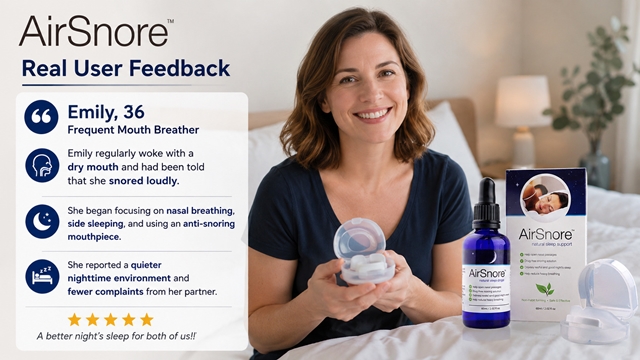
Emily, 36 – Frequent Mouth Breather
Emily regularly woke with a dry mouth and had been told that she snored loudly.
She began focusing on nasal breathing, side sleeping, and using an anti-snoring mouthpiece. She reported a quieter nighttime environment and fewer complaints from her partner.
Mark, 45 – Chronic Snorer
Mark noticed that his snoring became worse when sleeping on his back.
After combining side sleeping with the AirSnore mouthpiece, he reported that his nighttime breathing felt more comfortable.
James, 39 – Seasonal Congestion
James experienced more mouth breathing and snoring when dealing with seasonal nasal congestion.
He focused on managing his congestion and improving his bedtime routine while using AirSnore as additional anti-snoring support.
Individual experiences vary, and testimonials should not be interpreted as guaranteed results.
Who May Consider AirSnore?
AirSnore may appeal to adults who:
- Regularly experience snoring
- Notice they sleep with their mouth open
- Want a non-invasive anti-snoring option
- Prefer an oral appliance
- Want additional nighttime respiratory support
- Are looking for alternatives to more complicated anti-snoring equipment
However, anyone experiencing possible sleep apnea symptoms should seek professional evaluation.
Safety Considerations
An anti-snoring mouthpiece may not be suitable for everyone.
Use caution if you have:
- Significant dental problems
- Loose teeth
- Dentures
- Jaw pain
- Temporomandibular joint problems
- Other oral health conditions
A dental professional can help determine whether an oral appliance is appropriate.
The herbal ingredients should also be reviewed carefully if you take prescription medications or have known allergies.
Always follow the current manufacturer’s instructions and product label.
FAQs – Mouth Breathing While Sleeping
What causes mouth breathing while sleeping?
Common causes include nasal congestion, allergies, a deviated septum, enlarged tissues, sleeping position, and airway narrowing.
Can mouth breathing while sleeping cause snoring?
It can contribute to snoring because breathing through the mouth may alter airflow through the upper airway and increase tissue vibration.
Can AirSnore help with mouth breathing?
AirSnore is designed primarily to reduce snoring and support nighttime breathing. Its mouthpiece may help by supporting a more favorable airway position, but it isn’t guaranteed to eliminate mouth breathing.
Does sleeping with your mouth open mean you have sleep apnea?
Not necessarily. Mouth breathing can have many causes. However, persistent mouth breathing combined with loud snoring, gasping, or breathing pauses should be evaluated by a healthcare professional.
Why do I wake up with a dry mouth?
Breathing through the mouth during sleep can cause increased dryness. Nasal congestion, medications, dehydration, and certain sleep disorders may also contribute.
Can sleeping on my side reduce mouth breathing?
Side sleeping may help improve airway positioning and reduce snoring for some people, although it does not necessarily resolve nasal obstruction.
Can allergies cause mouth breathing at night?
Yes. Nasal congestion caused by allergies can make nasal breathing difficult and encourage mouth breathing.
Is nasal breathing better than mouth breathing?
When the nasal passages are healthy and unobstructed, nasal breathing is generally the preferred route because the nose filters, warms, and humidifies incoming air.
Can losing weight help with mouth breathing and snoring?
If excess weight contributes to upper-airway narrowing, gradual weight loss may help reduce snoring and improve nighttime breathing.
Does alcohol make mouth breathing worse?
Alcohol can relax upper-airway muscles and may increase snoring and airway narrowing in some people.
Can an anti-snoring mouthpiece keep my mouth closed?
The purpose of an anti-snoring mouthpiece is generally to support airway positioning rather than simply force the mouth shut. The underlying cause of mouth breathing should still be addressed.
When should I see a doctor about mouth breathing?
Seek professional advice if mouth breathing is persistent or occurs alongside loud snoring, gasping, choking, witnessed breathing pauses, excessive daytime sleepiness, or persistent nasal obstruction.
Final Verdict
Mouth breathing while sleeping can be an annoying nighttime habit, but it may also provide a clue that your nasal passages or upper airway aren’t functioning optimally during sleep.
AirSnore offers a non-invasive approach that combines an oral mouthpiece designed to support airway positioning with a herbal component intended to promote nighttime respiratory comfort. For some adults, this approach may help reduce snoring and create a more comfortable sleeping environment.
However, AirSnore shouldn’t be viewed as a universal solution for mouth breathing. If nasal congestion, allergies, structural nasal problems, or suspected sleep apnea are involved, addressing the underlying issue is more important.
Final Thought
If you regularly wake with a dry mouth, snore loudly, or discover that you sleep with your mouth open, start by looking at your nighttime breathing habits. Improving nasal airflow, sleeping on your side, avoiding alcohol before bed, maintaining a healthy weight, and establishing a consistent sleep routine can all be useful steps.
For adults looking for additional support, AirSnore may be worth considering as part of a broader strategy to encourage more comfortable nighttime breathing and reduce snoring. Most importantly, persistent or severe symptoms should never be ignored, particularly when they may indicate an underlying sleep disorder.

Zahra Thunzira is a Jakarta-based nutritionist and gym instructor. She’s also an adventure travel, fitness, and health writer for several blogs and websites. She earned her Master degree in Public Health from University of Indonesia.

