
Cutting sounds simple on paper: eat fewer calories, lose body fat, and reveal the muscle you’ve worked so hard to build.
In reality, it’s much more complicated.
As your calorie intake decreases, the number on the scale may fall—but not all of that weight necessarily comes from body fat. Without the right approach, some of the weight you lose can come from lean tissue, including muscle.
That’s why losing muscle while cutting is one of the biggest concerns for people trying to achieve a leaner, more defined physique.
You may notice that your muscles look flatter, your strength begins to decline, or your usual workouts suddenly feel much harder. If the calorie deficit is too aggressive or your training and protein intake aren’t properly managed, maintaining your hard-earned muscle can become increasingly difficult.
This is where a strategic approach becomes important.

Tren-Max by CrazyBulk is marketed as a dietary supplement for men seeking support for muscle growth, strength, endurance, workout performance, and recovery. While it shouldn’t be viewed as a magic solution for preserving muscle during a calorie deficit, it may fit into a broader cutting routine alongside resistance training, adequate protein, sensible calorie restriction, and sufficient recovery.
In this guide, we’ll look at why you’re losing muscle while cutting, how to preserve lean mass, what role Tren-Max may play, and which strategies matter most when your goal is to lose fat without sacrificing muscle.
Table of Contents
What Does “Losing Muscle While Cutting” Mean?
A cutting phase typically involves consuming fewer calories than your body uses so that stored energy is mobilized and body weight decreases.
Ideally, most of the weight you lose during a successful cut comes from body fat.
However, your body can also lose lean tissue during prolonged or aggressive calorie restriction.
This may become more likely when you combine:
- A very large calorie deficit
- Insufficient protein
- Lack of resistance training
- Excessive cardio
- Poor sleep
- High levels of fatigue
- Inadequate recovery
- A prolonged dieting period
The goal isn’t necessarily to make the scale fall as quickly as possible.
The better goal is to reduce body fat while retaining as much muscle and strength as reasonably possible.
Why Are You Losing Muscle While Cutting?
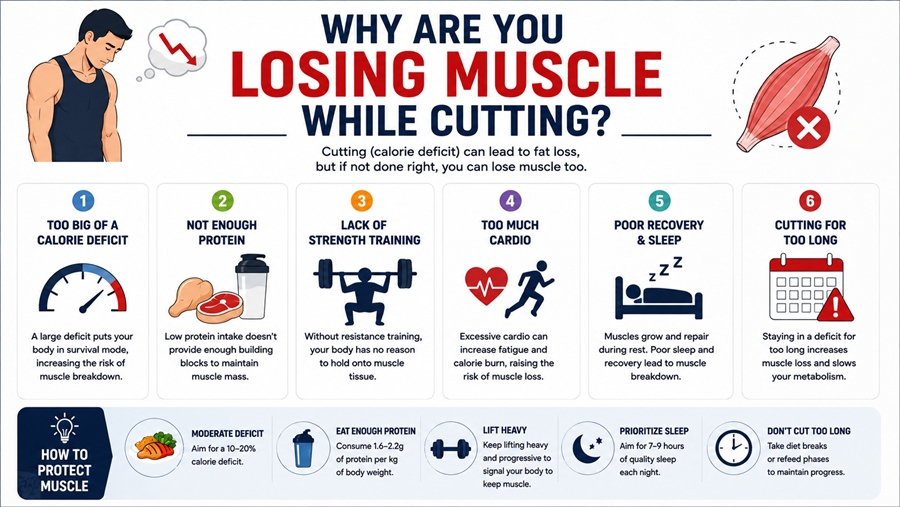
Several factors can contribute to muscle loss during a fat-loss phase.
1. Your Calorie Deficit Is Too Aggressive
A larger calorie deficit can produce faster weight loss, but faster isn’t always better.
When energy availability becomes too low, maintaining training performance and lean tissue can become more challenging.
A moderate, sustainable deficit is generally easier to manage than an extreme crash diet.
Rather than dramatically cutting food intake, aim for a controlled approach that allows you to continue training effectively.
2. You’re Not Eating Enough Protein
Protein becomes particularly important during a calorie deficit.
Your body needs amino acids to support muscle protein synthesis and tissue maintenance.
If you’re cutting calories while simultaneously reducing protein intake, you’re making muscle retention more difficult.
Good protein sources include:
- Chicken
- Turkey
- Lean beef
- Fish
- Eggs
- Greek yogurt
- Cottage cheese
- Milk
- Whey protein
- Soy
- Tofu
- Beans
- Lentils
3. You’ve Stopped Lifting Heavy
One common cutting mistake is turning every workout into a high-repetition “fat-burning” session.
Muscle responds to resistance.
During a cut, continuing to provide your muscles with an appropriate strength stimulus can help signal that the tissue is still needed.
You don’t necessarily need to train exactly as you did during a calorie surplus, but resistance training should remain a major part of your routine.
4. You’re Doing Excessive Cardio
Cardiovascular exercise can be an effective tool for increasing energy expenditure.
The problem occurs when cardio becomes excessive and interferes with:
- Strength training
- Recovery
- Appetite management
- Sleep
- Overall energy levels
You don’t have to eliminate cardio.
The goal is to use it strategically.
5. You’re Not Recovering Properly
A calorie deficit already places additional demands on your body.
Combine that with hard training, poor sleep, and high daily stress, and recovery can become increasingly difficult.
If your strength is falling rapidly and you’re constantly exhausted, adding more training may be counterproductive.
Signs You May Be Losing Muscle While Cutting
Weight loss alone doesn’t tell you whether you’re losing fat or muscle.
Look for multiple indicators.
Declining Strength
If your major lifts are consistently becoming weaker, pay attention.
One bad workout doesn’t necessarily mean muscle loss, but a persistent downward trend deserves investigation.
Smaller Measurements
If your arms, thighs, chest, and other muscular areas are shrinking substantially, it may indicate loss of lean mass—although changes in glycogen and water can also affect measurements.
Poor Workout Performance
If you suddenly struggle to complete your usual sets and repetitions, fatigue or inadequate nutrition may be affecting performance.
Rapid Weight Loss
Very rapid weight loss can increase the risk of losing lean tissue, particularly when protein intake and resistance training are inadequate.
Persistent Fatigue
Feeling exhausted throughout the day can indicate that your calorie deficit, training load, sleep, or recovery strategy needs adjustment.
How to Preserve Muscle While Cutting
If you’re concerned about losing muscle while cutting, focus on the fundamentals first.
Keep Resistance Training a Priority
Your muscles need a reason to stay.
Continue performing resistance exercises that challenge the major muscle groups.
Focus on:
- Squats
- Deadlifts
- Bench presses
- Rows
- Pull-ups
- Overhead presses
- Lunges
- Leg presses
You don’t have to set personal records every workout.
The objective is to maintain as much strength and training quality as possible while reducing body fat.
Maintain Sufficient Protein
Protein is arguably one of the most important nutritional considerations during a cut.
Your exact protein requirements depend on factors such as body weight, body composition, training volume, and calorie intake.
A sports dietitian can help determine an appropriate target for your individual situation.
Use a Moderate Calorie Deficit
Instead of drastically reducing food intake, create a manageable deficit.
A slower rate of weight loss can make it easier to maintain:
- Strength
- Training performance
- Energy
- Muscle mass
- Dietary adherence
The ideal rate varies between individuals, particularly depending on starting body composition and training experience.
Don’t Eliminate Carbohydrates
Carbohydrates can provide valuable fuel for resistance training and other high-intensity activities.
Useful choices include:
- Rice
- Oats
- Potatoes
- Sweet potatoes
- Pasta
- Whole-grain bread
- Bananas
- Berries
- Other fruits
Keeping carbohydrates around your workouts may help support training performance.
Get Enough Dietary Fat
Dietary fat provides energy and plays important roles in normal physiological function.
Include sources such as:
- Avocado
- Nuts
- Seeds
- Olive oil
- Eggs
- Fatty fish
What Is Tren-Max?
Tren-Max is a CrazyBulk dietary supplement marketed toward men interested in muscle growth, strength, endurance, workout performance, and recovery.
CrazyBulk positions Tren-Max as a natural alternative to Trenbolone.
However, these products should not be confused.
Tren-Max is a dietary supplement, not pharmaceutical trenbolone, and it should not be considered equivalent to anabolic steroid therapy.
For someone concerned about losing muscle while cutting, Tren-Max is better understood as an optional component of a broader fitness routine rather than a direct muscle-preservation treatment.
Tren-Max Ingredients

The current Tren-Max formula contains a combination of vitamins, minerals, and botanical ingredients.
Ashwagandha
Ashwagandha is an adaptogenic herb traditionally used in Ayurvedic medicine.
Research has explored its potential relationship with stress, strength, exercise performance, and recovery.
Its presence in Tren-Max contributes to the product’s broader focus on physical performance and recovery.
However, it should not be assumed that ashwagandha supplementation automatically prevents muscle loss during calorie restriction.
Magnesium
Magnesium is an essential mineral involved in hundreds of physiological processes.
It contributes to normal:
- Muscle function
- Energy metabolism
- Nervous-system function
- Electrolyte balance
Maintaining adequate magnesium intake is important during a demanding training program.
Zinc
Zinc contributes to normal protein synthesis, metabolism, immune function, and numerous other physiological processes.
Adequate zinc intake is important for overall health, particularly when following a restrictive diet.
Vitamin E
Vitamin E functions as an antioxidant and helps protect cells from oxidative stress.
It contributes to normal immune function as well.
Nettle Leaf Extract
Nettle leaf is a botanical ingredient traditionally used in herbal preparations.
It contributes to the herbal component of Tren-Max.
Cat’s Claw Bark
Cat’s claw is another botanical traditionally used in herbal medicine.
Its inclusion contributes to the overall botanical formulation.
Fennel Seed Extract
Fennel seed has a history of traditional use and is included in Tren-Max’s botanical blend.
Cinnamon Bark Extract
Cinnamon bark is included as another botanical component of the formula.
While cinnamon has been studied for metabolic effects, it should not be interpreted as a standalone muscle-preservation ingredient.
How Tren-Max May Fit Into a Cutting Routine
If you’re losing muscle while cutting, Tren-Max may fit into your routine as supplemental support for the performance and recovery side of training.
Supporting Workout Performance
Maintaining training quality is important when calories are restricted.
If your workouts deteriorate significantly during a cut, you may struggle to provide enough resistance-training stimulus to maintain your muscle.
Tren-Max is marketed toward strength, endurance, and workout performance.
Supporting Strength
Maintaining strength during a cut can be a useful indicator that you’re preserving your training capacity.
Tren-Max is positioned as a supplement that supports strength and physical performance.
However, progressive resistance training remains the primary driver.
Supporting Recovery
Recovery becomes especially important when you’re dieting.
A calorie deficit can make demanding training feel more challenging, which makes adequate sleep and rest even more important.
Tren-Max is marketed toward recovery support, but it should complement—not replace—good recovery practices.
Supporting Endurance
Cutting can sometimes make workouts feel more difficult.
Tren-Max’s formulation is also marketed toward endurance and stamina, which may appeal to people who want additional support while maintaining their training routine.
Can Tren-Max Prevent Muscle Loss While Cutting?
It would be misleading to claim that Tren-Max can prevent muscle loss on its own.
Muscle retention during a cut depends on a combination of factors, including:
- Calorie deficit
- Protein intake
- Resistance training
- Training intensity
- Recovery
- Sleep
- Starting body composition
- Diet duration
- Individual physiology
Tren-Max may be used as a supplemental part of this strategy, but it doesn’t override an overly aggressive calorie deficit or inadequate protein intake.
If you’re consuming too few calories and not eating enough protein, the first step should be correcting those fundamentals.
Tren-Max vs. the Fundamentals of Muscle Preservation
| Strategy | Importance During Cutting |
|---|---|
| Adequate protein | Very high |
| Resistance training | Very high |
| Appropriate calorie deficit | Very high |
| Sufficient sleep | High |
| Recovery days | High |
| Hydration | High |
| Strategic cardio | Moderate to high |
| Tren-Max | Supplemental |
This is the right way to think about supplementation.
Tren-Max sits on top of the foundation rather than replacing it.
How to Structure Training While Cutting
Your training doesn’t have to become dramatically different simply because you’re cutting.
Keep Your Main Lifts
Continue training movements that allow you to measure strength over time.
For example:
Upper Body
- Bench press
- Overhead press
- Barbell rows
- Pull-ups
Lower Body
- Squats
- Romanian deadlifts
- Leg presses
- Lunges
Reduce Volume If Necessary
You may not have the same recovery capacity during a calorie deficit.
If you’re struggling to recover, consider reducing unnecessary volume while maintaining sufficient intensity.
This can allow you to continue stimulating your muscles without accumulating excessive fatigue.
Don’t Turn Every Workout Into Cardio
Resistance training should remain resistance training.
If you’re trying to preserve muscle, don’t replace your strength program with endless circuits simply because you’re cutting.
Cardio Without Sacrificing Muscle
Cardio can help create an energy deficit and improve cardiovascular fitness.
But more isn’t necessarily better.
Consider:
- Walking
- Incline walking
- Cycling
- Swimming
- Moderate-intensity cardio
If cardio starts negatively affecting your strength workouts or recovery, reconsider your volume and frequency.
What to Eat During a Cutting Phase
A successful cutting diet doesn’t have to be extremely restrictive.
Build meals around:
Protein
Chicken, fish, eggs, lean meat, dairy, tofu, legumes.
Vegetables
Leafy greens, broccoli, peppers, carrots, tomatoes, and other vegetables.
Carbohydrates
Rice, potatoes, oats, fruit, pasta, and whole grains.
Healthy Fats
Avocado, nuts, seeds, olive oil, and fatty fish.
The goal is to create a sustainable calorie deficit while providing enough nutrients to support training and recovery.
The Importance of Sleep During a Cut
Sleep deserves special attention when you’re worried about losing muscle while cutting.
Poor sleep can affect:
- Workout performance
- Recovery
- Energy
- Appetite regulation
- Training motivation
Try to establish a consistent sleep schedule and aim for sufficient nightly sleep.
If you’re consistently exhausted, don’t simply add more caffeine or supplements.
Look at your recovery first.
Hydration and Muscle Performance
Water is essential for normal physiological function.
Dehydration can contribute to fatigue and reduced exercise performance.
Make hydration a daily priority, especially when training in hot or humid conditions.
This is particularly relevant in environments where you’re sweating heavily during workouts.
Tren-Max Real User Feedback & Testimonials
Customer feedback can provide useful context for understanding how people have incorporated Tren-Max into their fitness routines.
The testimonials below focus specifically on named Tren-Max customers and the improvements they reported.
1. Michael B. – Improved Strength and Muscle Size
Michael B. from the United States reported improvements in strength and muscle size while using Tren-Max.
His experience is particularly relevant to people concerned about maintaining their physique during a demanding training period because he highlighted both performance and muscular development.
2. Chris – Better Workout Performance
Chris from the United States reported experiencing improved workout performance while using Tren-Max.
Maintaining workout quality is especially important during a calorie deficit, when energy levels may be lower than during a bulking phase.
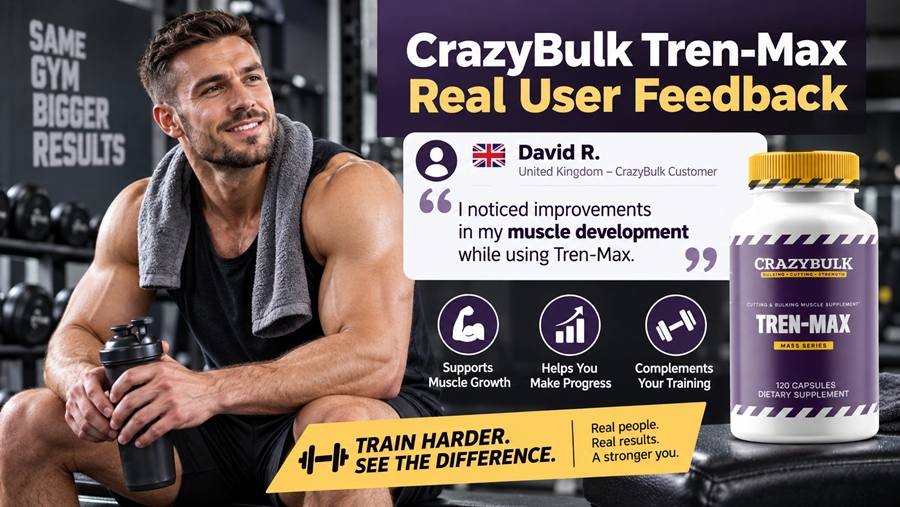
3. David R. – Improved Muscle Development
David R. from the United Kingdom reported noticeable improvements in muscle development while using Tren-Max.
His feedback may be relevant to people who are trying to maintain or improve their muscular appearance while working toward a leaner physique.
4. James – More Energy and Endurance
James from Canada reported experiencing increased energy and endurance during his workouts after using Tren-Max.
For someone following a cutting program, maintaining enough energy to complete resistance-training sessions can be an important part of preserving training quality.
Tren-Max Testimonials at a Glance
| Customer | Reported Improvement |
|---|---|
| Michael B. | Increased strength and muscle size |
| Chris | Improved workout performance |
| David R. | Better muscle development |
| James | Increased energy and workout endurance |
These are individual customer experiences rather than controlled clinical evidence. They should not be interpreted as a guarantee that Tren-Max will prevent muscle loss or produce the same results for every user.
How to Know Whether Your Cut Is Working
Don’t rely solely on the bathroom scale.
Track several indicators.
Body Weight
Take regular measurements under similar conditions and look at the overall trend.
Waist Measurement
A shrinking waist can be a useful indicator of fat loss.
Progress Photos
Take photos under similar lighting and conditions.
Strength
Monitor your major lifts.
Body Measurements
Measure your:
- Arms
- Chest
- Waist
- Thighs
- Shoulders
When multiple indicators are moving in the right direction, you can get a much clearer picture of your progress.
What If Your Strength Drops During a Cut?
A small decrease in strength doesn’t automatically mean you’ve lost muscle.
Several factors can temporarily reduce performance:
- Lower glycogen levels
- Reduced calorie intake
- Dehydration
- Poor sleep
- Accumulated fatigue
- Less favorable training conditions
However, if your strength continues to decline significantly over several weeks, it may be worth reviewing your calorie deficit, protein intake, training volume, and recovery.
Common Cutting Mistakes That Cause Muscle Loss
Cutting Calories Too Quickly
Extreme diets may produce rapid weight loss but can be difficult to sustain.
Eliminating Carbohydrates
Carbohydrates can support high-intensity training.
Dropping Protein
Protein becomes even more important when you’re restricting calories.
Replacing Strength Training With Cardio
Cardio has benefits, but it shouldn’t completely replace resistance training when muscle retention is a priority.
Training to Exhaustion Every Day
More fatigue doesn’t necessarily mean better results.
Ignoring Sleep
Poor sleep can undermine your entire cutting strategy.
Staying in a Deficit Too Long
Long periods of dieting can become increasingly challenging.
Depending on the individual and the overall plan, strategically planned maintenance periods may be useful.
Who May Consider Tren-Max During a Cut?
Tren-Max may appeal to adult men who:
- Regularly perform resistance training
- Are following a structured cutting program
- Want supplemental support for workout performance
- Want to support strength and endurance
- Want additional recovery support
- Are already prioritizing adequate protein and sleep
It shouldn’t be considered a treatment for unexplained muscle loss.
Safety Considerations
Before adding Tren-Max to your routine, review its current ingredient list and consider any other supplements or medications you’re taking.
This is especially important if you use multiple products containing overlapping vitamins, minerals, or botanical ingredients.
Speak with a healthcare professional before starting a new supplement if you:
- Take prescription medications
- Have an existing medical condition
- Are undergoing medical treatment
- Experience unexplained muscle loss
- Have persistent weakness
- Experience severe or persistent fatigue
If you’re losing muscle rapidly despite maintaining adequate nutrition and training, don’t assume the problem is simply your cutting strategy. Seek professional medical advice to investigate potential underlying causes.
FAQs – Tren-Max to Preserve Muscle While Cutting
Why am I losing muscle while cutting?
Losing muscle while cutting can happen when your calorie deficit is too aggressive, protein intake is inadequate, resistance training is insufficient, or recovery and sleep are poor.
Can Tren-Max prevent muscle loss during cutting?
Tren-Max cannot guarantee prevention of muscle loss. It is marketed to support strength, workout performance, endurance, and recovery, but muscle preservation depends primarily on nutrition, resistance training, and recovery.
How much protein should I eat while cutting?
Your ideal intake depends on body weight, body composition, training status, and calorie intake. A qualified sports nutrition professional can help determine an appropriate target for your circumstances.
Should I stop lifting heavy while cutting?
Not necessarily. Maintaining appropriately challenging resistance training can help provide the stimulus needed to preserve muscle.
Is cardio bad for muscle retention?
No. Cardio can be useful during a cut. Problems can arise when excessive cardio interferes with resistance training, recovery, or energy availability.
Does losing strength mean I’m losing muscle?
Not necessarily. Strength can temporarily decrease because of lower calories, glycogen, hydration, sleep, or fatigue. A persistent decline combined with shrinking measurements may be more concerning.
What is Tren-Max?
Tren-Max is a CrazyBulk dietary supplement marketed for muscle growth, strength, endurance, workout performance, and recovery.
Does Tren-Max contain trenbolone?
No. Tren-Max is a dietary supplement and is not pharmaceutical trenbolone or equivalent to anabolic steroid therapy.
What ingredients are in Tren-Max?
The formula includes ingredients such as ashwagandha, magnesium, zinc, vitamin E, nettle leaf extract, cat’s claw bark, fennel seed extract, and cinnamon bark extract.
When should I take Tren-Max?
CrazyBulk’s current directions recommend taking Tren-Max before workouts on training days. Follow the product’s current label for the latest usage instructions.
Can I build muscle while losing fat?
It is possible in certain circumstances, particularly for beginners, people returning to training, and individuals with higher body-fat levels. For experienced lean lifters, simultaneously gaining significant muscle and losing fat is generally more difficult.
How quickly should I lose weight during a cut?
The appropriate rate varies according to starting body composition, training experience, and individual circumstances. A moderate and sustainable approach is generally preferable to extreme rapid weight loss when muscle retention is important.
Should I eat carbohydrates while cutting?
Yes. Carbohydrates can provide useful fuel for resistance training and high-intensity exercise. They don’t inherently prevent fat loss when total calorie intake is appropriate.
How can I tell if I’m losing fat instead of muscle?
Track body weight, waist measurements, progress photos, body measurements, and strength performance together rather than relying on the scale alone.
What should I do if I’m losing muscle rapidly?
Review your calorie deficit, protein intake, resistance training, sleep, and recovery. If muscle loss or weakness is significant or unexplained, consult a healthcare professional.
Final Verdict
Losing muscle while cutting can be frustrating, particularly when your goal is to reveal a leaner physique without sacrificing the muscle you’ve spent months or years building.
The key is to avoid treating fat loss as a race.
A sustainable calorie deficit, sufficient protein, consistent resistance training, strategic cardio, adequate sleep, hydration, and proper recovery should form the foundation of your cutting plan.
Tren-Max may fit into that routine as an additional supplement for men looking for support with strength, endurance, workout performance, and recovery. Its formulation includes ingredients such as ashwagandha, magnesium, zinc, vitamin E, and several botanical extracts.
However, it shouldn’t be viewed as a standalone solution for muscle preservation.
If your calorie deficit is excessive, your protein intake is too low, or you’re failing to recover, a supplement won’t compensate for those problems.
Final Thought
A successful cut isn’t simply about watching the scale move downward.
It’s about losing unwanted body fat while maintaining as much muscle and strength as possible.
Take a measured approach. Keep lifting. Eat enough protein. Don’t slash calories unnecessarily. Give yourself enough time to recover.
And if you choose to add Tren-Max to your routine, think of it as a supporting component—not the foundation—of your muscle-preservation strategy.

Zahra Thunzira is a Jakarta-based nutritionist and gym instructor. She’s also an adventure travel, fitness, and health writer for several blogs and websites. She earned her Master degree in Public Health from University of Indonesia.

