
Trying to start a family can be an exciting chapter, but it can also become frustrating when pregnancy doesn’t happen as quickly as expected. For men, one factor that may contribute to fertility challenges is low sperm count.
Low sperm count, medically known as oligospermia, means that semen contains fewer sperm than the typical reference level. Mayo Clinic defines a low sperm count as fewer than 15 million sperm per milliliter of semen or fewer than 39 million sperm in the entire ejaculate. Importantly, sperm count is only one part of male fertility; sperm movement, shape, hormone levels, reproductive anatomy, and the health of both partners can also influence conception.
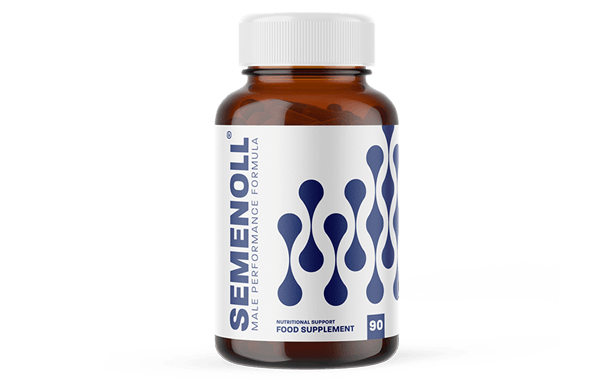
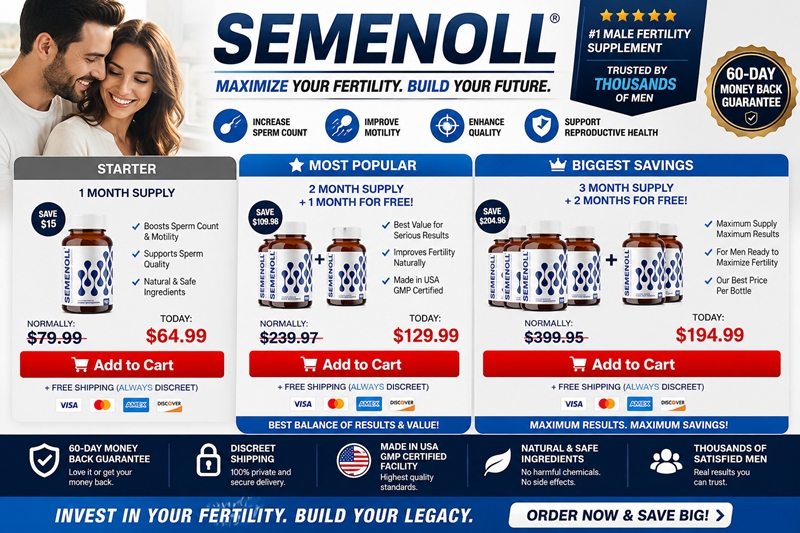
This is where nutritional and lifestyle support may become part of a broader fertility strategy. Semenoll is a non-prescription supplement marketed to support male fertility, semen quality, sperm health, semen volume, and sexual wellness.
But can Semenoll actually help if you’re struggling with low sperm count? And what should you realistically expect from a fertility supplement?
Let’s take a closer look.
Table of Contents
What Is Low Sperm Count?
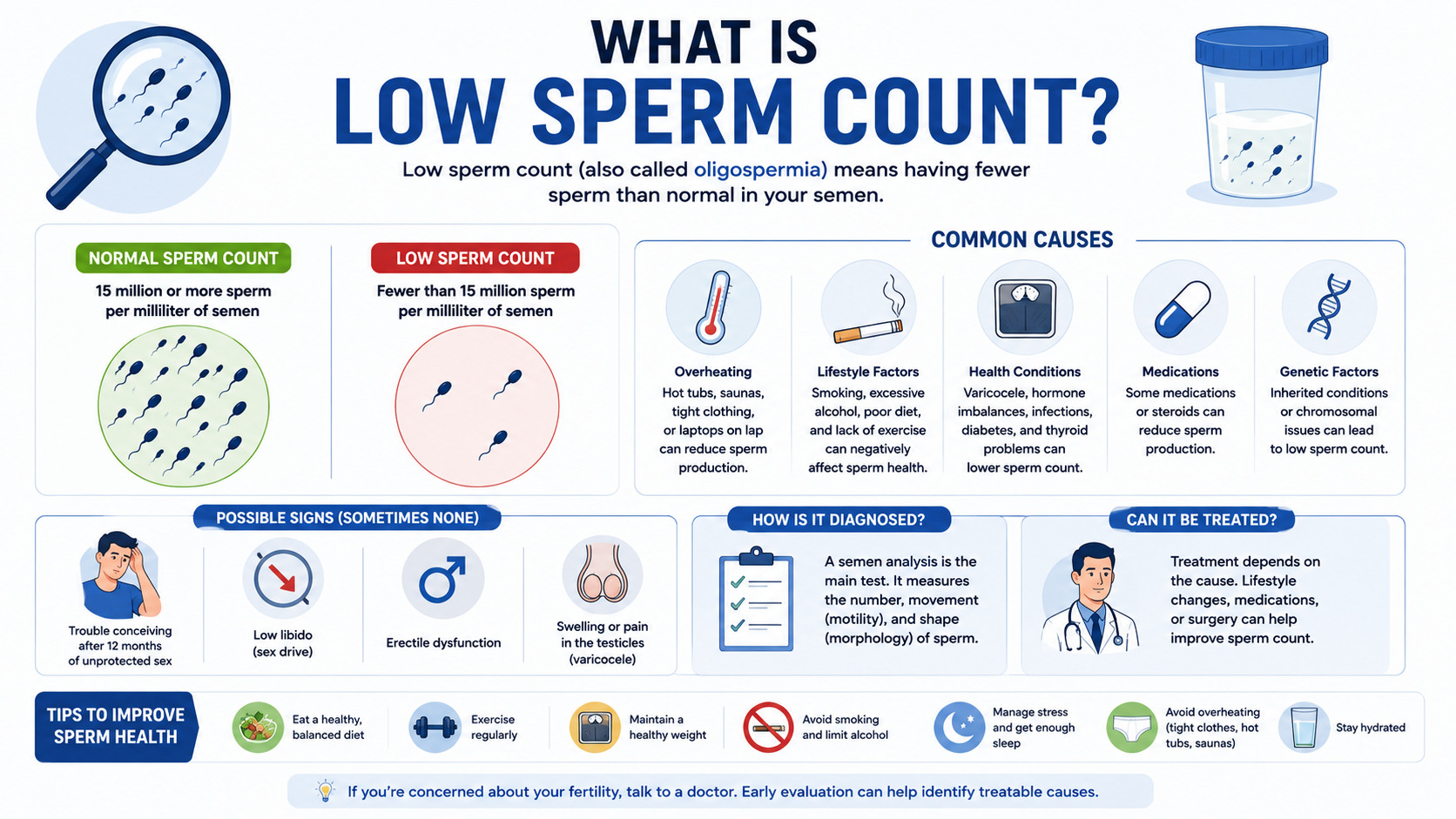
Low sperm count occurs when the concentration or total number of sperm in an ejaculate falls below commonly used reference levels.
According to Mayo Clinic, a sperm concentration below 15 million sperm per milliliter is considered lower than typical. A total sperm count below 39 million per ejaculate is also considered low.
However, these numbers shouldn’t be interpreted as a simple fertility “pass or fail” test.
A man with a relatively low sperm count can sometimes still father a child, while a man with a normal sperm count can experience fertility problems for other reasons. Sperm motility, morphology, semen volume, ejaculation, reproductive anatomy, and the female partner’s fertility all matter.
That’s why a semen analysis is much more informative than judging fertility based on semen appearance or volume alone.
Low Sperm Count vs. Low Semen Volume
These two terms are often confused.
Sperm count refers to the number of sperm cells present in semen.
Semen volume refers to how much fluid is ejaculated.
You can have a normal semen volume but a relatively low concentration of sperm. Conversely, you may have a relatively high semen volume without having a high sperm concentration.
This distinction is particularly important when evaluating a product such as Semenoll. A noticeable change in ejaculate volume does not automatically mean that sperm count or fertility has improved.
If conception is the goal, laboratory testing remains the best way to determine whether sperm concentration and other semen parameters are changing.
What Causes Low Sperm Count?
There isn’t one universal cause of low sperm count.
Male fertility can be influenced by hormones, genetics, testicular function, reproductive anatomy, medications, illnesses, environmental exposures, and lifestyle factors.
Mayo Clinic lists several potential contributors, including smoking, alcohol use, certain drugs, obesity, stress, previous infections, testicular trauma, some medications, cancer treatments, and exposure to toxins. Excessive heat around the testicles may also temporarily affect sperm production.
Some causes are relatively easy to address, while others require medical treatment.
Potential contributors include:
- Smoking
- Excessive alcohol consumption
- Recreational drug use
- Anabolic steroid use
- Obesity or significant weight gain
- Poor dietary habits
- Chronic stress
- Poor sleep
- Certain medications
- Hormonal abnormalities
- Varicocele
- Testicular injury
- Previous infections
- Genetic conditions
- Blockages in the reproductive tract
- Cancer treatment
- Excessive heat exposure
- Certain environmental chemicals
Anabolic steroids deserve particular attention because they can suppress the body’s natural reproductive hormone signaling and may significantly reduce sperm production.
For that reason, a fertility strategy should address the underlying cause whenever one is identifiable rather than relying solely on supplements.
How Is Low Sperm Count Diagnosed?
If you’re concerned about low sperm count, the most useful first step is generally a semen analysis.
The test evaluates characteristics of semen and sperm, including:
- Sperm concentration
- Total sperm number
- Sperm motility
- Sperm morphology
- Semen volume
- Other characteristics depending on the laboratory
The American Urological Association and American Society for Reproductive Medicine recommend reproductive history and one or more semen analyses as part of the initial evaluation of male fertility.
Why One Test May Not Tell the Whole Story
Sperm production isn’t completely static.
Semen analysis results can vary between samples, and collection problems can also affect the result. Mayo Clinic notes that healthcare professionals may therefore request multiple semen samples over time.
Sperm also take time to develop. Mayo Clinic estimates that sperm take approximately 42 to 76 days to mature, meaning that changes made today may not immediately appear in a semen analysis.
This is one reason why fertility improvement should be viewed as a process rather than something that necessarily happens within a few days.
What Is Semenoll?
Semenoll is a dietary supplement marketed specifically toward male fertility and reproductive wellness.
The manufacturer describes Semenoll as a combination of natural ingredients intended to support:
- Sperm health
- Semen quality
- Sperm count
- Semen volume
- Sexual wellness
- Libido
- Overall reproductive health
The official Semenoll site recommends taking three capsules in the morning and says that fertility-related results may require longer-term use, with the company suggesting at least three months for its best fertility-related results.
That recommendation is important because reproductive health is fundamentally different from products designed to produce an immediate sensation.
Semenoll should therefore be viewed as supportive nutritional supplementation, rather than a medical treatment for infertility.
How Could Semenoll Support Men With Low Sperm Count?
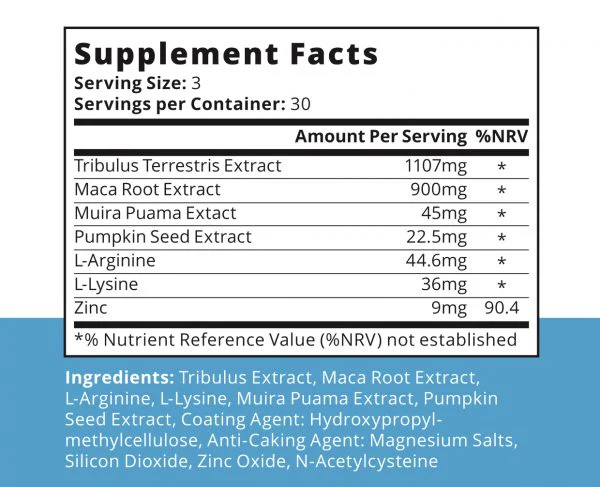
The formula combines several botanical extracts, minerals, and amino acids.
The idea behind the formula is to provide nutritional and botanical support for different aspects of male reproductive health.
The seven primary ingredients listed for Semenoll include:
- Maca root extract
- Tribulus terrestris
- Zinc
- Muira puama
- Pumpkin seed extract
- L-arginine
- L-lysine
Independent reviewer Innerbody notes that Semenoll contains several ingredients that have been studied in relation to semen characteristics, sexual health, or reproductive function, while also pointing out that some ingredients are present at doses lower than those used in certain studies.
That distinction matters.
An ingredient having scientific research behind it doesn’t necessarily mean that the exact dose contained in a particular supplement will reproduce the findings of a clinical study.
Semenoll Ingredients Explained
1. Maca Root Extract
Maca is a plant native to the Andes and has become a popular ingredient in supplements targeting sexual and reproductive health.
The Semenoll formula includes maca root extract as one of its central ingredients.
Research into maca has investigated areas including sexual desire and semen characteristics. Innerbody notes that some human studies have reported improvements in semen characteristics, although the doses used in research may differ from the amount provided by Semenoll.
For a man concerned about low sperm count, maca is therefore interesting because research has explored whether it may support aspects of semen health.
However, it should not be interpreted as a proven treatment for clinical oligospermia.
2. Tribulus Terrestris
Tribulus terrestris is another prominent botanical in Semenoll.
It has traditionally been used in various herbal systems for male sexual health.
The Semenoll website cites research investigating Tribulus and sperm parameters, including an in-vitro study examining human sperm characteristics.
This provides an interesting scientific basis for including the ingredient in a fertility-oriented formula.
Nevertheless, laboratory findings aren’t the same as demonstrating that a finished supplement increases pregnancy rates in humans.
Tribulus should therefore be viewed as a potential supportive ingredient, not a guaranteed solution for low sperm count.
3. Zinc
Zinc is an essential mineral involved in numerous biological processes.
For men, adequate zinc intake is particularly relevant because zinc participates in normal reproductive and cellular functions.
Semenoll uses zinc oxide as its zinc source. Innerbody reports that the product contains approximately 9 mg of zinc and describes this amount as relatively modest compared with doses used in some competing fertility formulas.
The key takeaway is that zinc is nutritionally important, but more isn’t necessarily better.
Men should avoid automatically adding large amounts of supplemental zinc on top of Semenoll without considering their total daily intake.
4. Muira Puama
Muira puama is a botanical traditionally associated with sexual wellness.
Semenoll includes it primarily as a sexual-health ingredient.
The manufacturer references research in which muira puama was investigated in relation to libido and erectile function.
This is relevant because sexual function is one component of successful conception.
However, improving libido is not the same thing as correcting low sperm count.
Muira puama may therefore have a supporting role in the broader sexual-wellness aspect of a fertility routine rather than acting as a direct treatment for oligospermia.
5. Pumpkin Seed Extract
Pumpkin seed extract is another component of the formula.
Pumpkin seeds naturally provide nutrients and compounds that have attracted interest in men’s health research.
Innerbody notes that research has investigated pumpkin seed extract in relation to semen characteristics, although the dosage used in Semenoll is lower than the amount used in some studies.
This is another example of why ingredient research should be interpreted carefully.
The existence of research on an ingredient does not prove that the finished product will produce identical results.
6. L-Arginine
L-arginine is an amino acid involved in nitric oxide production and blood-flow pathways.
It is frequently included in male sexual-health supplements because circulation can influence erectile function and sexual performance.
Some research has also investigated L-arginine in relation to semen parameters.
However, Innerbody notes that the amount of L-arginine in Semenoll is relatively low compared with doses used in some studies.
That means it is more appropriate to describe L-arginine in Semenoll as part of the formula’s overall nutritional support rather than promising a specific fertility outcome.
7. L-Lysine
L-lysine is an essential amino acid involved in protein-related processes.
It is another component of Semenoll’s formula.
Early research has investigated amino acids such as lysine in relation to male sexual and reproductive function, although the evidence is not strong enough to treat lysine supplementation as an established therapy for low sperm count.
Its inclusion adds another nutritional component to the broader formulation.
What Are the Potential Benefits of Semenoll?
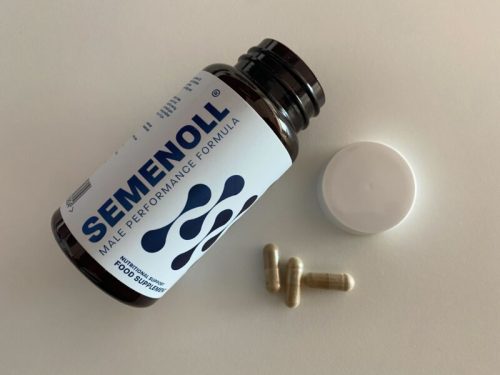
If you’re struggling with low sperm count, the potential appeal of Semenoll is that it combines several ingredients rather than focusing on a single nutrient.
Based on the manufacturer’s positioning and available ingredient research, the potential areas of support include:
Support for Sperm Health
Several ingredients in Semenoll have been investigated in relation to semen or sperm characteristics.
This makes the formula relevant to men who want nutritional support as part of a broader fertility strategy.
Support for Semen Quality
Semen quality involves much more than volume.
Sperm concentration, motility and morphology are important considerations when evaluating male fertility.
A supplement cannot be assumed to improve all of these parameters, but nutritional support may complement healthy lifestyle habits.
Support for Sexual Wellness
Ingredients such as muira puama and L-arginine are included partly because of their relationship with sexual function.
Better libido or sexual function can make maintaining a consistent conception routine easier.
Support for Semen Volume
Semenoll is also marketed toward men interested in increased semen volume.
However, increased volume should not be confused with increased sperm concentration.
If fertility is your primary concern, laboratory semen analysis is much more meaningful than judging changes in ejaculate volume.
Can Semenoll Increase Sperm Count?
This is one of the most important questions to answer realistically.
Semenoll is marketed as a supplement that may support sperm count and male fertility, but it should not be considered a clinically proven treatment for low sperm count.
The manufacturer’s website specifically states that Semenoll contains ingredients intended to support healthy sperm count, semen volume and male fertility.
At the same time, independent analysis has raised concerns that several ingredients are supplied at lower doses than those used in research studies.
Therefore, it would be inappropriate to promise that Semenoll will increase sperm count for every man.
If a semen analysis confirms low sperm count, identifying the underlying cause should remain the priority.
Semenoll and the 90-Day Fertility Window
One reason fertility supplements often require patience is the biology of sperm production.
Sperm don’t appear instantly.
According to Mayo Clinic, sperm take approximately 42 to 76 days to mature.
That means a man’s current semen analysis can reflect aspects of his health and lifestyle from the preceding several weeks or months.
This makes a long-term approach more logical than expecting an overnight transformation.
A practical fertility-support routine might therefore involve:
Month 1:
Focus on consistency, diet, sleep, exercise and eliminating obvious lifestyle risk factors.
Month 2:
Continue the routine while maintaining healthy weight, reducing stress and avoiding excessive heat exposure.
Month 3:
Consider reassessing progress with appropriate medical guidance and, where recommended, repeat semen testing.
This isn’t a guaranteed timeline for improvement. Instead, it reflects the time required for sperm production and maturation.
How to Use Semenoll
According to the manufacturer’s current instructions, men should take three Semenoll capsules once daily, preferably first thing in the morning.
For a fertility-focused routine, consistency is likely more important than taking the product sporadically.
However, always follow the current label supplied with your product because formulations and directions can change.
It is also sensible to discuss supplementation with a healthcare professional if you:
- Take prescription medications
- Have a diagnosed fertility condition
- Have hormonal problems
- Have kidney or liver disease
- Have undergone testicular or reproductive surgery
- Are receiving fertility treatment
- Are using testosterone therapy
- Are using anabolic steroids
- Have been diagnosed with azoospermia
- Have very low sperm counts
- Have unexplained infertility
Lifestyle Changes That Can Support Male Fertility
A supplement should never be the entire fertility strategy.
Mayo Clinic recommends several lifestyle measures that may help protect male reproductive health, including regular exercise, a balanced diet, adequate sleep, stress management, reducing alcohol, avoiding tobacco and illicit drugs, and avoiding excessive heat exposure.
Stop Smoking
Smoking can negatively affect male fertility.
If you smoke, quitting is likely to be more important than adding another supplement to your routine.
Limit Alcohol
Excessive alcohol consumption can affect hormones, sexual function and sperm production.
Reducing alcohol intake can therefore be an important part of a fertility-focused lifestyle.
Maintain a Healthy Weight
Excess body weight can influence hormonal balance and reproductive health.
A gradual approach combining nutritious food and regular physical activity is generally preferable to extreme dieting.
Exercise Regularly
Regular physical activity supports cardiovascular and metabolic health.
However, extremely excessive training combined with inadequate calorie intake can also create problems.
The goal should be sustainable exercise rather than constant physical exhaustion.
Prioritize Sleep
Sleep is often overlooked when discussing male fertility.
Aim for a consistent sleep schedule and adequate nightly rest.
Manage Stress
Trying unsuccessfully to conceive can itself become stressful.
Chronic stress may affect sleep, sexual function and overall health, so stress management deserves a place in the fertility plan.
Avoid Excessive Heat
Mayo Clinic recommends trying not to overheat the testicles because elevated temperatures may affect sperm production.
This doesn’t mean that every hot shower will damage fertility, but repeated excessive heat exposure may be worth discussing with a healthcare professional if sperm quality is already a concern.
What About Testosterone and Low Sperm Count?
This is a particularly important issue for men using testosterone.
Testosterone is involved in male reproductive physiology, but taking external testosterone is not a fertility treatment.
In fact, anabolic steroids and exogenous testosterone can suppress the hormonal signals required for sperm production. Mayo Clinic specifically identifies anabolic steroid use as a potential cause of reduced sperm count.
Therefore, men who are trying to conceive should not assume that increasing testosterone automatically improves fertility.
If you’re currently using testosterone replacement therapy or anabolic steroids and are experiencing low sperm count, discuss the situation with a qualified fertility or reproductive-health professional rather than attempting to manage it with supplements alone.
Semenoll vs. Medical Fertility Treatment
Semenoll and medical fertility treatment serve very different purposes.
| Approach | Primary Purpose | Best Use |
|---|---|---|
| Semenoll | Nutritional and botanical support | Complementary fertility routine |
| Semen analysis | Measures sperm characteristics | First-line assessment |
| Hormone testing | Identifies hormonal abnormalities | When clinically indicated |
| Varicocele treatment | Corrects an anatomical problem | When varicocele contributes to infertility |
| Prescription medication | Addresses certain medical causes | When medically appropriate |
| Assisted reproductive technology | Helps achieve pregnancy | When natural conception is difficult |
The American Urological Association and American Society for Reproductive Medicine recommend evaluating men with abnormal semen parameters or presumed infertility and using the results to guide management.
That means supplements should generally complement — rather than replace — appropriate medical evaluation.
Semenoll Real User Feedback & Testimonials
Semenoll’s official website publishes testimonials from customers who report improvements in fertility-related outcomes. These are individual customer experiences rather than clinical evidence, and the company itself states that testimonial results may not be typical. It also notes that some names and photographs are stock images for illustrative purposes.
Here are several of the named testimonials published by Semenoll:
Michael S.
Michael S. reported that he and his wife had been trying to conceive for more than a year and that he had been concerned about having a low sperm count.
According to his testimonial, after using Semenoll he experienced what he described as a significant increase in sperm count along with improvements in sexual health.
Paul
Paul reported that he and his wife had been trying to conceive for six months.
He said he started taking Semenoll and later reported that his wife received a positive pregnancy test.
Laura & Tim
Laura and Tim reported that they had struggled to conceive for two years.
According to their testimonial, Tim used three Semenoll capsules daily and they reported becoming pregnant after approximately six weeks.

Tom R.
Another testimonial published by Semenoll comes from Tom R. of Traverse City, Michigan.
He reported that he and his partner had been trying for two years and had considered IVF before trying Semenoll. He said that after using the product for several months, his partner became pregnant.
Wally R.
Wally R. of Phoenix reported that he and his wife wanted to start a family and had been trying for some time.
He said that after taking Semenoll he noticed increased sexual desire and a greater amount of semen.
These reports can be encouraging, but they shouldn’t be interpreted as proof that Semenoll caused pregnancy or increased sperm count in every case.
Pregnancy involves both partners and many biological factors, while individual testimonials don’t control for diet, lifestyle, timing of intercourse, previous fertility status, or other interventions.
Is Semenoll Safe?
Semenoll is marketed as a natural, non-prescription supplement.
However, “natural” doesn’t automatically mean risk-free.
Individual ingredients can cause side effects or interact with medications. Independent analysis of Semenoll notes that some ingredients may cause digestive discomfort and recommends considering potential interactions and individual health circumstances.
Before taking Semenoll, speak with a healthcare professional if you:
- Take medication regularly
- Have chronic health conditions
- Have diagnosed infertility
- Are undergoing IVF or IUI
- Have a hormonal disorder
- Are taking testosterone
- Have a history of reproductive surgery
- Have allergies to botanical ingredients
If you develop unusual symptoms after taking a supplement, stop using it and seek appropriate medical advice.
How Long Does Semenoll Take to Work?
There is no guaranteed timeframe for fertility improvement.
The manufacturer says some customers notice changes in sexual performance within the first few weeks and recommends at least three months for its best fertility and reproductive-health results.
However, sperm production itself takes several weeks.
Mayo Clinic reports that sperm require approximately 42 to 76 days to mature.
Consequently, men concerned about low sperm count shouldn’t judge fertility progress solely by how they feel after taking a supplement for a few days.
If the goal is to determine whether sperm health has actually changed, a properly performed semen analysis provides much more useful information.
Can You Improve Low Sperm Count Naturally?
Sometimes lifestyle changes can help address modifiable factors associated with sperm health.
A practical approach includes:
- Eat a nutrient-dense diet.
- Exercise consistently.
- Maintain a healthy weight.
- Stop smoking.
- Reduce excessive alcohol consumption.
- Avoid recreational drugs.
- Avoid anabolic steroids unless medically prescribed and managed.
- Get adequate sleep.
- Manage chronic stress.
- Avoid excessive testicular heat.
- Review medications with your doctor.
- Consider appropriate nutritional supplementation.
- Get a semen analysis if fertility is a concern.
Mayo Clinic specifically recommends regular exercise, a balanced diet, adequate sleep, stress management, avoiding tobacco and illicit drugs, limiting alcohol and avoiding excessive heat as part of male fertility-supportive lifestyle measures.
When Should You See a Fertility Specialist?
If you’ve been trying to conceive without success, don’t wait indefinitely while experimenting with supplements.
Mayo Clinic recommends medical evaluation when pregnancy hasn’t occurred after one year of regular unprotected sex, or sooner in certain circumstances, such as when there are known reproductive problems or other risk factors.
You should consider seeking medical advice sooner if you have:
- A known low sperm count
- No sperm in the semen
- Testicular pain or swelling
- A testicular lump
- Erectile or ejaculation problems
- A history of testicular injury
- Previous reproductive surgery
- A history of undescended testicles
- Previous chemotherapy or radiation
- Testosterone or anabolic steroid use
- Known hormonal abnormalities
- A previous fertility problem
A reproductive specialist can investigate whether the problem is related to sperm production, hormone signaling, anatomical factors, obstruction, genetics, or another medical issue.
Semenoll for Men Over 40
Male fertility doesn’t suddenly stop at 40, but age can be one factor in reproductive health.
Men over 40 who are trying to conceive may therefore benefit from taking a more comprehensive approach to health.
Rather than focusing solely on semen volume, consider:
- Cardiovascular health
- Body weight
- Blood pressure
- Blood sugar
- Sleep
- Exercise
- Alcohol intake
- Smoking
- Medication use
- Hormonal health
- Sperm quality
A supplement such as Semenoll may fit into this broader wellness strategy, but age-related or medically significant fertility problems still require proper evaluation.
Who May Consider Semenoll?
Semenoll may appeal to adult men who:
- Want nutritional support for male fertility
- Are trying to conceive
- Want to support healthy sperm
- Want to support semen quality
- Are interested in reproductive wellness
- Prefer a non-prescription supplement
- Want to combine supplementation with healthier lifestyle habits
However, men with diagnosed infertility should view Semenoll as a potential adjunct, not a replacement for medical care.
Who Should Not Rely on Semenoll Alone?
Semenoll shouldn’t be your only strategy if you already know that you have:
- Severe oligospermia
- Azoospermia
- A significant hormonal disorder
- Varicocele
- Reproductive tract obstruction
- Genetic fertility problems
- Significant testicular damage
- Infertility associated with cancer treatment
- A condition requiring prescription treatment
These situations may require targeted medical intervention.
The AUA/ASRM guideline specifically recommends evaluation by a male reproductive expert when semen parameters are abnormal or male infertility is suspected.
FAQs About Low Sperm Count and Semenoll
What is considered a low sperm count?
A sperm concentration below 15 million sperm per milliliter or a total sperm count below 39 million sperm per ejaculate is commonly classified as low according to Mayo Clinic.
Can low sperm count cause infertility?
Low sperm count can reduce the probability that a sperm will fertilize an egg, but it doesn’t necessarily mean that natural pregnancy is impossible. Other sperm and reproductive factors also matter.
Can Semenoll increase sperm count?
Semenoll is marketed to support healthy sperm count and male fertility, but there is not sufficient evidence to guarantee that the finished product will increase sperm count in every man. Independent analysis has also noted that some ingredients are provided at doses below those used in certain studies.
How long should I take Semenoll?
The manufacturer recommends using Semenoll consistently and states that its best fertility-related results may require at least three months.
Can Semenoll improve sperm motility?
Some ingredients in Semenoll have been studied in relation to semen and sperm characteristics, but there isn’t enough evidence to guarantee that Semenoll itself will improve sperm motility. A semen analysis is the best way to measure motility.
Can low sperm count be reversed?
Sometimes. If the cause is related to a modifiable lifestyle factor, medication, hormonal problem, varicocele or another treatable condition, addressing that cause may improve fertility. Other causes may require specialized treatment.
Does more semen mean more sperm?
Not necessarily. Semen volume and sperm concentration are separate measurements. A larger ejaculate does not automatically mean that the semen contains more sperm.
Can smoking cause low sperm count?
Smoking is associated with male fertility problems and may reduce sperm count. Quitting smoking is one of the most useful lifestyle changes a man can make for overall health and potentially reproductive health.
Does alcohol affect sperm count?
Excessive alcohol consumption can negatively affect testosterone levels, sexual function and sperm production. Reducing alcohol intake may therefore be an important component of a fertility-focused lifestyle.
Can anabolic steroids cause low sperm count?
Yes. Anabolic steroids can suppress natural reproductive hormone signaling and reduce sperm production. Mayo Clinic lists anabolic steroid use among potential contributors to male infertility.
How long does it take sperm to develop?
Mayo Clinic estimates that sperm take approximately 42 to 76 days to mature. This is one reason fertility-related lifestyle changes can take several weeks or months to become apparent in semen testing.
Should I get a semen analysis before taking Semenoll?
If you are genuinely concerned about low sperm count, getting a semen analysis is a sensible starting point. It provides objective information about sperm concentration, total sperm number, motility and other semen characteristics.
Can I take Semenoll while trying to conceive?
Semenoll is marketed specifically toward men trying to support fertility. However, if you take medications, have a medical condition, or are already receiving fertility treatment, consult your healthcare professional before adding any supplement.
Can lifestyle changes improve sperm health?
Lifestyle factors can influence male reproductive health. Regular exercise, balanced nutrition, healthy weight management, adequate sleep, reduced alcohol intake, avoiding tobacco and illicit drugs, stress management and avoiding excessive heat are among the measures recommended by Mayo Clinic.
When should a man see a doctor about low sperm count?
You should seek medical evaluation if a semen analysis shows abnormal results or if you and your partner have been trying to conceive without success. Medical assessment is particularly important when there is testicular pain, swelling, erectile or ejaculation problems, previous reproductive surgery, cancer treatment, or other known fertility risks.
Final Verdict: Can Semenoll Support Men Struggling With Low Sperm Count?
Low sperm count can be a frustrating fertility challenge, but it doesn’t automatically mean that fatherhood is out of reach.
The first priority should always be understanding what’s happening. A semen analysis can provide valuable information about sperm concentration and other semen parameters, while a medical evaluation can investigate potential causes.
Semenoll offers a combination of maca, Tribulus terrestris, zinc, muira puama, pumpkin seed extract, L-arginine and L-lysine. Several of these ingredients have been investigated for aspects of male sexual or reproductive health, although the evidence for the finished Semenoll product is not strong enough to guarantee an increase in sperm count or pregnancy rates.
The most sensible way to approach Semenoll is as one part of a larger male fertility strategy.
That strategy can include:
Semenoll + balanced nutrition + regular exercise + healthy weight + quality sleep + stress management + avoiding smoking and excessive alcohol + appropriate medical testing.
If you’re struggling with low sperm count, don’t measure progress solely by semen volume or sexual performance. Ultimately, objective semen testing and professional medical evaluation provide much more meaningful information.
Final Thought
Fertility isn’t simply about producing more semen. It’s about producing healthy sperm, maintaining appropriate reproductive function, and addressing whatever factors may be interfering with conception.
Semenoll may provide nutritional and botanical support for men who want to take a proactive approach to reproductive wellness. But if you have confirmed low sperm count or have been trying to conceive without success, supplementation should complement — not replace — proper fertility evaluation.
The goal isn’t simply to produce more. The goal is healthier reproductive function and a better-informed path toward conception.

Zahra Thunzira is a Jakarta-based nutritionist and gym instructor. She’s also an adventure travel, fitness, and health writer for several blogs and websites. She earned her Master degree in Public Health from University of Indonesia.

