
Trying to conceive can be an exciting experience, but concerns about poor sperm quality can quickly turn that excitement into uncertainty. Male fertility depends on much more than sperm count alone. Sperm need to be produced in sufficient numbers, move effectively, have a healthy structure, and be capable of reaching and fertilizing an egg.
When semen analysis reveals abnormal sperm parameters, many men naturally begin looking for ways to improve their reproductive health. Diet, exercise, sleep, stress management, and avoiding factors that can damage sperm are important foundations. Nutritional supplements may also be considered as part of a broader fertility-support strategy.
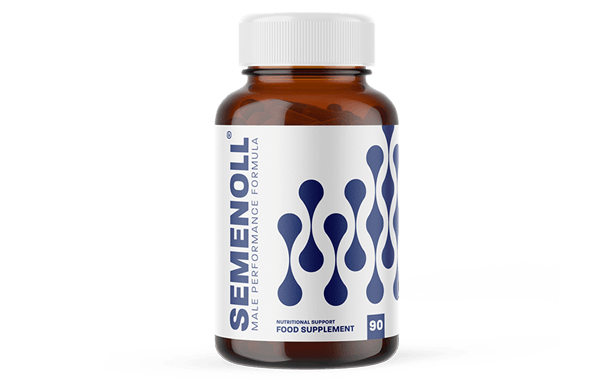
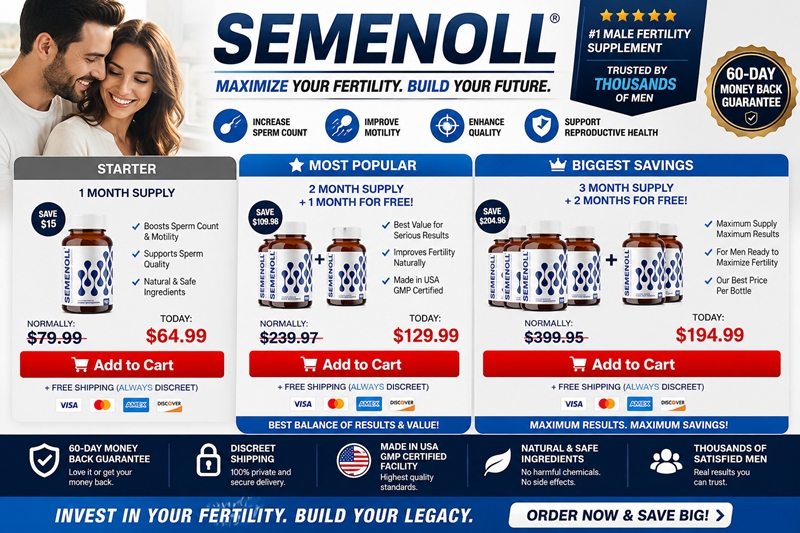
Semenoll is a male fertility supplement formulated with ingredients such as maca, Tribulus terrestris, zinc, muira puama, pumpkin seed extract, L-arginine, and L-lysine. It is marketed to support sperm health, semen quality, semen volume, and overall male reproductive wellness.
But what exactly does poor sperm quality mean? Can lifestyle changes make a difference? And where does Semenoll fit into a sensible male fertility routine?
Let’s take a closer look.
Table of Contents
What Does Poor Sperm Quality Mean?
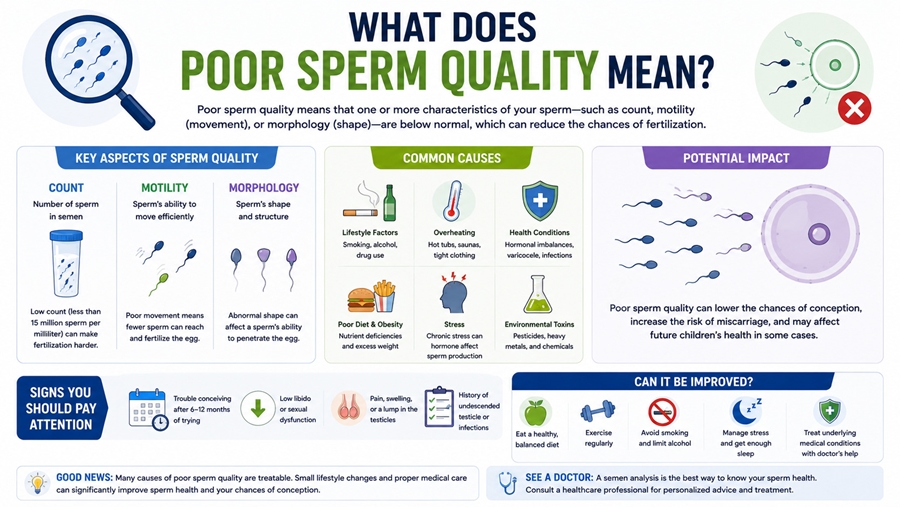
Poor sperm quality is a broad term that can describe abnormalities in one or more characteristics of sperm.
A semen analysis generally evaluates several important parameters, including:
- Sperm concentration
- Total sperm count
- Sperm motility
- Sperm morphology
- Semen volume
- Other characteristics depending on the laboratory
This means that a man can have a normal sperm count but still experience fertility difficulties because his sperm don’t move effectively or have an unusually high proportion of abnormal forms.
Likewise, having some abnormal sperm does not automatically mean that natural conception is impossible.
Human semen naturally contains sperm with different characteristics. Fertility is influenced by the overall combination of sperm concentration, movement, morphology, reproductive health, and the fertility of both partners.
Sperm Count vs. Sperm Quality
These terms are often used interchangeably, but they’re not the same.
Sperm Count
Sperm count refers to the number of sperm present in semen.
Mayo Clinic commonly describes a concentration below 15 million sperm per milliliter or a total count below 39 million sperm per ejaculate as low.
Sperm Motility
Motility refers to how sperm move.
Sperm generally need to move effectively to travel through the female reproductive tract and reach an egg.
Sperm Morphology
Morphology describes the size and shape of sperm.
A semen analysis can determine what proportion of sperm have a typical structure.
Semen Volume
Semen volume refers to the amount of fluid ejaculated.
More semen doesn’t necessarily mean better sperm quality.
This distinction is particularly important for men considering products marketed for semen volume. A noticeable increase in ejaculate volume doesn’t automatically indicate improvements in sperm concentration, motility, or morphology.
What Are the Signs of Poor Sperm Quality?
One of the frustrating aspects of poor sperm quality is that there may be no obvious symptoms.
A man can have abnormal semen parameters while experiencing:
- Normal erections
- Normal ejaculation
- Normal libido
- Normal sexual pleasure
- Normal-looking semen
In many cases, fertility difficulties become apparent only when a couple tries to conceive.
Mayo Clinic notes that male infertility may not have obvious signs apart from difficulty getting a partner pregnant.
That’s why semen analysis is considerably more useful than attempting to judge sperm quality based on appearance.
What Causes Poor Sperm Quality?
There can be many contributors to poor sperm quality.
Some are temporary or modifiable, while others involve underlying medical or reproductive conditions.
Potential factors include:
- Smoking
- Excessive alcohol consumption
- Recreational drug use
- Anabolic steroid use
- Certain medications
- Obesity
- Poor nutrition
- Chronic stress
- Poor sleep
- Excessive heat exposure
- Testicular injury
- Varicocele
- Hormonal disorders
- Previous infections
- Genetic conditions
- Cancer treatment
- Certain environmental exposures
Mayo Clinic also identifies problems affecting sperm production, sperm transport, hormones, and reproductive anatomy as possible contributors to male infertility.
Anabolic Steroids and Sperm Health
Men who use testosterone or anabolic steroids should pay particular attention to fertility.
External testosterone can suppress the hormonal signals responsible for natural sperm production. Anabolic steroid use is therefore an important potential contributor to male infertility.
If you’re actively trying to conceive, discuss testosterone or anabolic steroid use with a qualified healthcare professional instead of assuming that higher testosterone automatically means better fertility.
How Is Poor Sperm Quality Diagnosed?
The most useful test is a semen analysis.
Rather than guessing whether sperm are healthy based on semen appearance or sexual performance, semen analysis provides objective information.
Depending on the laboratory, the test may measure:
| Parameter | What It Tells You |
|---|---|
| Sperm concentration | Number of sperm per milliliter |
| Total sperm count | Total number of sperm in the ejaculate |
| Motility | How effectively sperm move |
| Morphology | Sperm size and shape |
| Semen volume | Amount of ejaculate |
| Other parameters | Additional characteristics assessed by the laboratory |
The American Urological Association and American Society for Reproductive Medicine recommend semen analysis as an important component of male infertility evaluation.
Why One Semen Analysis May Not Be Enough
Semen parameters can fluctuate.
For this reason, healthcare professionals may recommend more than one sample before drawing conclusions.
It’s also important to understand that sperm production takes time.
Mayo Clinic estimates that sperm take approximately 42 to 76 days to mature.
This means that changes to diet, exercise, sleep, smoking, alcohol consumption, or supplementation may not immediately appear in semen testing.
What Is Semenoll?
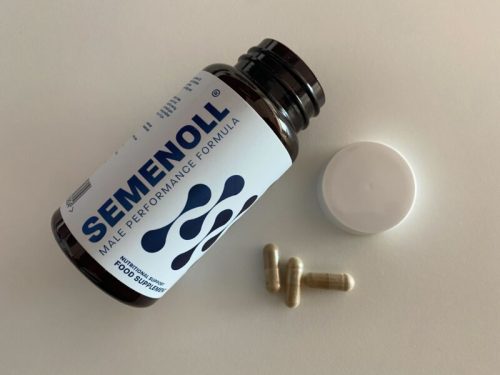
Semenoll is a dietary supplement marketed specifically for men’s reproductive and sexual health.
Its formula combines botanical extracts, amino acids, and minerals intended to provide nutritional support for male fertility.
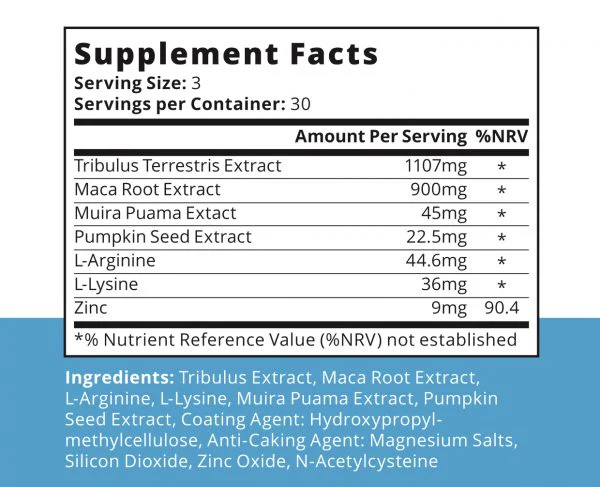
The primary ingredients marketed in the formula include:
- Maca root extract
- Tribulus terrestris
- Zinc
- Muira puama
- Pumpkin seed extract
- L-arginine
- L-lysine
The manufacturer positions Semenoll as a product designed to support sperm health, semen quality, semen volume, sexual wellness, and male fertility.
It is important, however, to distinguish supporting reproductive health from treating a diagnosed fertility disorder.
Semenoll is a dietary supplement, not a prescription infertility treatment.
How Could Semenoll Support Poor Sperm Quality?
The rationale behind Semenoll is its combination of several ingredients associated with male reproductive and sexual health.
Some individual ingredients have been investigated in human or laboratory research involving semen characteristics, sexual function, or reproductive health.
However, evidence for individual ingredients shouldn’t automatically be interpreted as proof that the finished Semenoll product will improve fertility in every man.
Independent analysis of the formula has also pointed out that some ingredients are supplied at doses lower than those used in certain studies.
With that important qualification in mind, here’s how the major ingredients fit into the formula.
Semenoll Ingredients and Their Potential Roles
Maca Root Extract
Maca is a plant originating from the Andes and has a long history of traditional use for vitality and sexual wellness.
It has attracted scientific interest because researchers have investigated its potential effects on sexual desire and semen characteristics.
For men concerned about poor sperm quality, maca is therefore an interesting ingredient because of its connection to reproductive research.
However, studies involving maca have used different preparations and doses, so results from research cannot automatically be applied to every maca-containing supplement.
Tribulus Terrestris
Tribulus terrestris is another botanical commonly used in men’s health supplements.
It has traditionally been associated with libido, sexual performance, and male vitality.
The Semenoll manufacturer cites research involving Tribulus and sperm characteristics.
While this makes it a logical inclusion in a male fertility formula, more research is needed to establish whether Tribulus supplementation reliably improves fertility outcomes.
Zinc
Zinc is an essential mineral involved in numerous biological processes.
Adequate nutritional intake is important for overall health and normal reproductive function.
Semenoll includes zinc as part of its formula.
The goal isn’t necessarily to consume extremely high amounts of zinc. Instead, the emphasis should be on maintaining adequate nutritional status.
Men already taking multivitamins or other fertility supplements should consider their total zinc intake to avoid unnecessarily excessive supplementation.
Muira Puama
Muira puama is a botanical traditionally used for sexual wellness.
Semenoll includes it primarily as part of its broader male sexual-health formulation.
Research has investigated muira puama in areas including libido and sexual function.
That makes it potentially relevant to men who want support for overall sexual wellness while trying to conceive.
However, improved libido shouldn’t be confused with improved sperm quality.
Pumpkin Seed Extract
Pumpkin seeds contain a variety of nutrients and plant compounds.
Pumpkin seed extracts have attracted interest in men’s health research, including research relating to reproductive health.
Semenoll incorporates pumpkin seed extract as another nutritional component of its fertility-focused formula.
As with the other ingredients, evidence relating to an ingredient isn’t equivalent to clinical proof that the finished product will correct abnormal semen parameters.
L-Arginine
L-arginine is an amino acid involved in nitric oxide production and blood-flow pathways.
It’s commonly found in men’s sexual-health formulas because healthy circulation can contribute to normal erectile function.
Some research has also explored L-arginine in relation to semen characteristics.
However, the amount included in a particular supplement matters. A research study using a specific dose shouldn’t automatically be assumed to represent the effect of the lower amount found in another product.
L-Lysine
L-lysine is an essential amino acid.
It’s involved in protein-related biological processes and is included in Semenoll as part of the formula’s nutritional approach.
Although amino acids have been studied in relation to male reproductive health, evidence isn’t sufficient to describe L-lysine alone as a treatment for poor sperm quality.
Potential Benefits of Semenoll for Male Fertility
Semenoll’s combination of ingredients is intended to provide broad reproductive support rather than targeting just one aspect of fertility.
Potential areas of support include:
Supporting Healthy Sperm
Several Semenoll ingredients have been studied in connection with sperm or semen characteristics.
This gives the formula relevance for men interested in nutritional support for sperm health.
Supporting Semen Quality
Semen quality involves several parameters, including concentration, motility, and morphology.
A fertility supplement should therefore be viewed as part of a broader strategy rather than something that guarantees improvement in every parameter.
Supporting Sexual Wellness
Ingredients such as maca, muira puama, and L-arginine are also associated with sexual wellness.
Maintaining healthy libido and sexual function can be helpful when couples are trying to conceive.
Supporting Overall Reproductive Wellness
The formula provides a combination of minerals, amino acids, and botanical extracts.
This makes Semenoll more comprehensive than relying on a single nutrient.
Can Semenoll Improve Poor Sperm Quality?
This question deserves a realistic answer.
Semenoll may provide nutritional support for male reproductive health, but there isn’t enough evidence to guarantee that it will correct poor sperm quality or cause a specific improvement in semen analysis results.
The manufacturer markets Semenoll specifically for male fertility and sperm health, while independent analysis highlights that evidence surrounding the individual ingredients varies and that some ingredients may be present at doses below those used in research.
Therefore, men shouldn’t use Semenoll as a substitute for medical diagnosis.
If a semen analysis shows abnormal motility, morphology, or concentration, the next step should be identifying potential causes.
How Long Does It Take to Improve Sperm Quality?
Patience is important.
Sperm production isn’t an overnight process.
Mayo Clinic estimates that sperm take roughly 42 to 76 days to mature.
Consequently, a fertility-focused lifestyle plan often needs to be maintained consistently for several months.
The manufacturer recommends taking Semenoll daily and states that its best fertility-related results may require at least three months.
A reasonable approach is to think in terms of a three-month fertility window, rather than expecting major changes after several days.
Month 1: Build the Foundation
Focus on:
- Better nutrition
- Consistent exercise
- Adequate sleep
- Reducing alcohol
- Avoiding smoking
- Managing stress
- Taking Semenoll consistently if you’ve chosen to use it
Month 2: Maintain Consistency
Continue the same habits.
Avoid constantly changing supplements or routines because reproductive changes take time.
Month 3: Evaluate
If sperm quality was previously abnormal, consider discussing repeat semen analysis with your healthcare provider.
This can provide objective information about whether semen parameters have changed.
Lifestyle Habits That May Support Better Sperm Quality
Supplements are only one piece of the puzzle.
If your goal is improving poor sperm quality, lifestyle should be treated as a major component of your fertility strategy.
Eat a Nutrient-Dense Diet
Focus on foods such as:
- Vegetables
- Fruits
- Whole grains
- Fish
- Eggs
- Lean protein
- Nuts
- Seeds
- Legumes
- Healthy fats
A balanced diet provides vitamins, minerals, antioxidants, protein, and other nutrients needed for overall health.
Maintain a Healthy Weight
Being significantly overweight can affect metabolic and hormonal health.
Gradual weight management may therefore be useful for men who are carrying excess body fat.
Avoid crash diets, however.
Extreme calorie restriction can create its own nutritional problems.
Exercise Regularly
Moderate, consistent exercise supports cardiovascular and metabolic health.
Resistance training and aerobic activity can both be useful components of a balanced routine.
The goal is consistency rather than extreme training volume.
Get Enough Sleep
Poor sleep can negatively affect general health and may influence hormonal and metabolic processes.
Aim for a consistent sleep schedule and sufficient nightly rest.
Reduce Chronic Stress
Trying to conceive can become emotionally exhausting.
Stress management strategies might include:
- Walking
- Exercise
- Meditation
- Breathing exercises
- Hobbies
- Social activities
- Time away from work
- Professional counseling when appropriate
Stop Smoking
Smoking is associated with impaired male reproductive health.
If you’re trying to improve sperm quality, quitting smoking is a much more important intervention than simply adding another supplement.
Limit Excessive Alcohol
Heavy alcohol consumption can affect hormonal balance and reproductive health.
Reducing excessive alcohol intake can therefore be an important part of a fertility strategy.
Avoid Recreational Drugs
Certain recreational drugs can negatively affect reproductive function.
If you’re concerned about poor sperm quality, discuss substance use honestly with your healthcare provider.
Protect Your Testicles From Excessive Heat
Sperm production works best at a temperature slightly below normal body temperature.
Repeated excessive heat exposure may negatively affect sperm production.
Depending on individual circumstances, it may be sensible to avoid prolonged exposure to:
- Very hot tubs
- Frequent sauna sessions
- Excessive heat around the groin
- Keeping a laptop directly on the lap for extended periods
You don’t need to become afraid of ordinary daily activities, but men with known fertility concerns may benefit from minimizing unnecessary heat exposure.
Semenoll vs. Medical Fertility Treatment
Semenoll and medical fertility treatment shouldn’t be confused.
| Approach | Main Purpose |
|---|---|
| Semenoll | Nutritional and botanical fertility support |
| Semen analysis | Measures sperm and semen characteristics |
| Hormone testing | Investigates hormonal contributors |
| Ultrasound/imaging | Investigates certain anatomical problems |
| Prescription treatment | Addresses specific medical causes |
| Surgery | May correct certain anatomical problems |
| IVF/ICSI | Assisted reproductive options |
If a man has confirmed poor sperm quality, the appropriate treatment depends on why the sperm parameters are abnormal.
For example, a hormonal problem requires a different approach from a varicocele or reproductive tract obstruction.
Semenoll Real User Feedback & Testimonials

The Semenoll manufacturer publishes customer testimonials describing experiences with fertility, sexual health, and semen-related changes.
These are individual customer reports, not clinical evidence, and they should not be interpreted as proof that Semenoll will produce the same results for every man.
Michael S.
Michael S. reported that he and his wife had been trying to conceive for more than a year and that he was concerned about his sperm count.
According to his testimonial published by Semenoll, he reported a significant improvement in sperm count and sexual health after using the product.
Paul
Paul reported that he and his wife had been trying to conceive for approximately six months.
His testimonial says that he began taking Semenoll and subsequently reported that his wife received a positive pregnancy test.
Laura & Tim
Laura and Tim reported that they had experienced difficulty conceiving for two years.
According to the testimonial published by Semenoll, Tim took three capsules daily and the couple reported becoming pregnant after approximately six weeks.
Tom R.
Tom R. of Traverse City, Michigan reported that he and his partner had been trying to conceive for two years.
His testimonial says that they had considered IVF before trying Semenoll and that his partner subsequently became pregnant after he used the supplement for several months.
Wally R.
Wally R. of Phoenix reported that he and his wife wanted to start a family.
His testimonial focuses more on sexual wellness, with Wally reporting increased sexual desire and greater semen volume after using Semenoll.
These stories are encouraging from a consumer perspective, but they cannot establish that Semenoll itself caused pregnancy or corrected abnormal sperm parameters.
Is Semenoll Safe?
Semenoll is marketed as a natural, non-prescription supplement.
However, natural ingredients can still produce side effects or interact with medications.
Potential concerns can include:
- Digestive discomfort
- Individual sensitivity to botanical ingredients
- Interactions with medications
- Excessive intake of overlapping nutrients when combined with other supplements
Before taking Semenoll, speak with a healthcare professional if you:
- Take prescription medication
- Have a chronic medical condition
- Have diagnosed infertility
- Are undergoing IVF or IUI
- Have a hormonal disorder
- Use testosterone
- Use anabolic steroids
- Have a history of testicular problems
- Have undergone reproductive surgery
Follow the current product label rather than relying on instructions from older reviews or websites because formulations and serving recommendations can change.
Can Poor Sperm Quality Be Improved Naturally?
In some cases, addressing modifiable lifestyle factors may help improve reproductive health.
The most useful strategy is usually a combination of several habits rather than searching for one “magic” supplement.
A practical approach includes:
- Eat a balanced, nutrient-dense diet.
- Maintain a healthy weight.
- Exercise consistently.
- Sleep adequately.
- Stop smoking.
- Limit excessive alcohol.
- Avoid recreational drugs.
- Avoid anabolic steroids.
- Manage stress.
- Minimize unnecessary excessive heat exposure.
- Review medications with your doctor.
- Consider appropriate nutritional supplementation.
- Obtain semen analysis when clinically appropriate.
This approach is more comprehensive than focusing solely on sperm count.
When Should You See a Doctor?
If you suspect poor sperm quality, don’t rely solely on supplements or visual observations.
Consider professional evaluation if:
- You’ve been trying to conceive for a year without success
- Your partner is over 35 and you’ve been trying for six months
- A previous semen analysis was abnormal
- You have very low sperm count
- You have no sperm in your semen
- You have testicular pain
- You notice testicular swelling or a lump
- You have erectile difficulties
- You have ejaculation problems
- You have a history of testicular injury
- You’ve had reproductive surgery
- You’ve undergone chemotherapy or radiation
- You use testosterone or anabolic steroids
Earlier evaluation can be particularly important when there are known fertility risk factors.
FAQs About Poor Sperm Quality and Semenoll
What is poor sperm quality?
Poor sperm quality generally refers to abnormal semen parameters such as reduced concentration, impaired motility, abnormal morphology, or combinations of these factors.
How do I know if I have poor sperm quality?
The most reliable way is through a semen analysis. Sexual performance and semen appearance cannot reliably determine sperm quality.
Can poor sperm quality cause infertility?
Yes, abnormal sperm concentration, motility, or morphology can reduce the likelihood of natural conception. However, abnormal sperm parameters don’t necessarily mean pregnancy is impossible.
Can Semenoll improve sperm quality?
Semenoll is marketed to support sperm health and male fertility, but there isn’t sufficient clinical evidence to guarantee that it will correct poor sperm quality in every man.
How long does sperm take to develop?
Mayo Clinic estimates that sperm take approximately 42 to 76 days to mature.
How long should I take Semenoll for fertility support?
The manufacturer recommends consistent use and states that its best fertility-related results may require at least three months.
Does semen volume indicate sperm quality?
No. Semen volume and sperm quality are separate measurements. A larger amount of semen doesn’t necessarily contain more healthy sperm.
Can diet affect sperm quality?
Diet can influence overall health and nutritional status, both of which are relevant to reproductive health. A balanced diet rich in whole foods is generally preferable to a highly processed diet.
Does smoking cause poor sperm quality?
Smoking is associated with impaired male reproductive health and may negatively affect sperm parameters. Quitting is an important step for men concerned about fertility.
Can alcohol affect sperm quality?
Excessive alcohol consumption can negatively affect hormonal and reproductive health. Reducing excessive alcohol intake can therefore be beneficial as part of a fertility-focused lifestyle.
Does exercise improve sperm quality?
Regular moderate exercise supports general health and can be beneficial for men trying to conceive. Excessive training combined with inadequate nutrition, however, isn’t necessarily beneficial.
Can stress affect sperm quality?
Chronic stress can affect sleep, lifestyle, sexual function, and overall health. Managing stress is therefore a useful component of a broader fertility strategy.
Can testosterone therapy lower sperm count?
Yes. External testosterone can suppress the hormonal signals involved in sperm production and may significantly reduce sperm production.
Can low sperm quality be reversed?
It depends on the cause. Some causes are modifiable or treatable, while others require specialized fertility management.
Should I get a semen analysis before taking Semenoll?
If you are genuinely concerned about poor sperm quality, a semen analysis can provide valuable baseline information. It can also help determine whether any future changes are actually measurable.
Final Verdict: Can Semenoll Support Poor Sperm Quality?
Poor sperm quality can be caused by many different factors, and there’s no single solution that works for every man.
The first step is understanding your individual situation. A semen analysis can provide information about sperm concentration, motility, morphology, and other important parameters. If abnormalities are detected, identifying the underlying cause is more important than simply trying multiple supplements.
Semenoll offers a combination of maca, Tribulus terrestris, zinc, muira puama, pumpkin seed extract, L-arginine, and L-lysine. Several of these ingredients have been investigated for aspects of male reproductive or sexual health, making the formula potentially interesting as part of a broader nutritional strategy.
However, the available evidence doesn’t justify promising that Semenoll will correct poor sperm quality, increase pregnancy rates, or produce a specific improvement in every man’s semen analysis.
The most sensible strategy is to combine Semenoll, if appropriate, with healthy nutrition, regular exercise, adequate sleep, stress management, healthy weight control, and avoidance of smoking, excessive alcohol, anabolic steroids, and unnecessary heat exposure.
And if you’re already dealing with an abnormal semen analysis, don’t wait for a supplement to solve the problem on its own. Professional fertility evaluation can identify treatable causes and help you choose the most appropriate next step.
Final Thought
When you’re trying to conceive, sperm quality matters just as much as sperm quantity.
A healthy fertility strategy isn’t about chasing a single number or expecting an overnight transformation. It’s about creating the best possible environment for normal sperm production while addressing medical issues when they exist.
Semenoll may be a useful nutritional addition for men looking to support male reproductive wellness, but it works best as part of a comprehensive fertility strategy—not as a substitute for medical care.

Zahra Thunzira is a Jakarta-based nutritionist and gym instructor. She’s also an adventure travel, fitness, and health writer for several blogs and websites. She earned her Master degree in Public Health from University of Indonesia.

